India’s nuclear milestone: Prototype fast breeder reactor achieves criticality

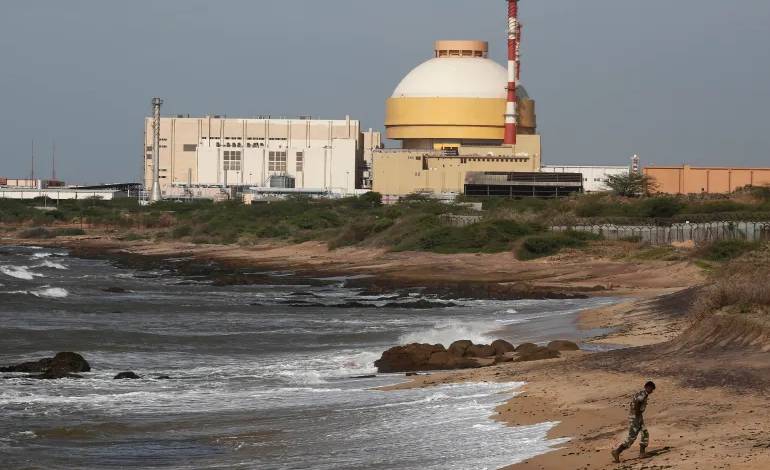
India has achieved a significant breakthrough in its nuclear energy program as the Prototype Fast Breeder Reactor (PFBR) at Kalpakkam, Tamil Nadu, reached criticality on Monday. This milestone marks a major leap forward in the country’s atomic energy program, taking it a step closer to reducing dependence on uranium imports.
The PFBR, designed and built indigenously, is a 500 MWe sodium-cooled, pool-type fast breeder reactor. Once fully operational, India will become only the second country after Russia to have a commercial fast breeder reactor.
Prime Minister Narendra Modi hailed the achievement as “a proud moment for India” and “a defining step” in advancing the country’s nuclear program. He emphasized that the reactor’s ability to produce more fuel than it consumes reflects India’s strong scientific capabilities and engineering expertise.
The PFBR is a crucial part of India’s three-stage nuclear power program, aimed at harnessing the country’s vast thorium reserves. The reactor will initially use uranium-plutonium mixed oxide fuel and eventually incorporate thorium-232, converting it into uranium-233.
This achievement demonstrates India’s growing strength in advanced nuclear technology, reactor design, and engineering. The PFBR is expected to provide reliable, low-carbon base-load power and support India’s goal of expanding its nuclear power capacity to 100 gigawatts by 2047.