Princeton grads build world’s first large-scale microplastic filter, deployed in Atlantic City

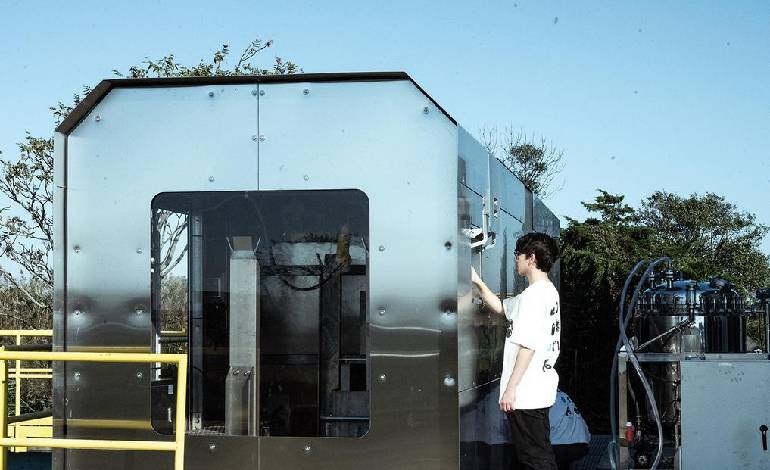
Atlantic City has become the first city in the world to deploy a large-scale device that filters microplastics out of wastewater.
The system was developed by PolyGone Technologies, a startup founded by two Princeton University graduates, Nathanial Banks and Yidian Liu. It is now being tested in a 2-year pilot program with the Atlantic County Utilities Authority (ACUA).
The implant mimics hydrophobic plants found in nature, which completely shed water on contact but attract microplastic particles. Water is shed while particles are trapped, allowing them to be collected and sent for recycling.
Lab tests showed a prototype could remove 98% of microplastic particles from wastewater. The pilot will test if that efficiency can be replicated at commercial scale for the city of 40,000.
“We’re discharging to the ocean. So, if we’re not removing the plastic that’s in our wastewater, we’re putting it back into the environment,” said Matt DeNafo, president of ACUA. “It’s getting into the fish that we’re eating, even the water that we’re bathing.
So, it really becomes an issue for human health.”Microplastics enter wastewater through washing machines, heavy rain and littering. Most treatment plants are designed for sewage, solids and heavy metals, but not microplastics. No federal regulation currently mandates their removal.”
This really marks a new era for treatment innovation, where we’re able to build very large, scalable systems that use a very small amount of material and very low energy to treat very challenging contaminants,” said Banks, CEO of PolyGone.
Both founders are architecture students. The company is also looking to scale down the technology for residential use.