Lakhs of blue tiger butterflies head towards Western Ghats

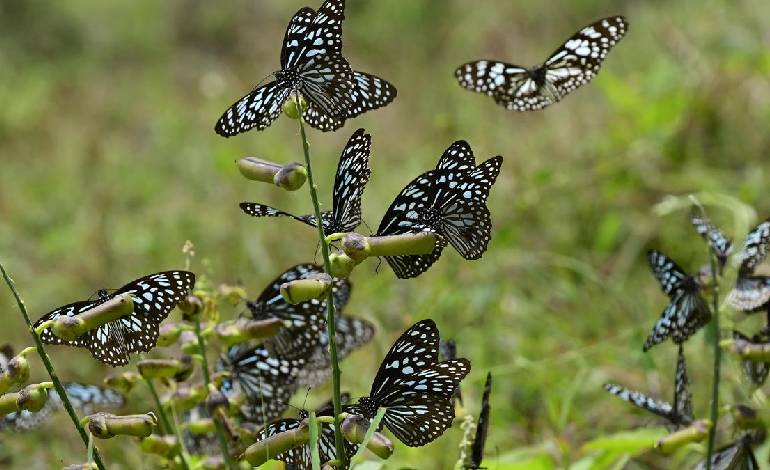
Even as makeshift shops selling flowers and puffed rice do brisk business on ayuda pooja day, in the skies above, something magical unfolds — lakhs of butterflies flying from the Eastern Ghats towards the Western Ghats.
The annual migration has begun with the onset of the North-East monsoon that is battering Chennai and its surrounding districts.
Butterfly watchers in cities along their path are on high alert. Alerts on the WhatsApp group Butterfly Migration India have invited people in Salem, Erode, Tiruppur, Coimbatore, Madurai and Kerala to step outside and count the butterflies.
According to The Nature and Butterfly Society (TNBS), which has been monitoring the phenomenon since 2013, this is the second wave of migration this season, following an earlier movement in mid-September. The current wave is larger, triggered by fresh North-East monsoon rains.
The movement primarily involves milkweed butterflies belonging to the Danainae subfamily — Blue Tiger (Tirumala limniace), Dark Blue Tiger (Tirumala septentrionis), Common Crow (Euploea core) and Double-branded Crow (Euploea sylvester).
Counts have been striking. According to TNBS core member CV Nishanth, some places in Coimbatore recorded as many as 100 to 120 individuals per minute. At Kalapatty Main Road, 120 individuals were spotted per minute at 9.50 am on October 18. In Rasipuram in Salem, Blue Tigers passed at a rate of 72 per minute. The movement peaked from October 17-18 across Coimbatore district, spanning from Mettupalayam to Singanallur, with rates soaring from 5 to 135 butterflies per minute.
The butterflies undertake this tedious journey to escape the rains and reach host plants in the forests of the Western Ghats, where they feed, breed and lay eggs.
The journey is not one-way. Around April and May, before the South-West Monsoon, the butterflies begin their reverse migration towards the eastern plains.
TNBS president A Pavendhan said the westward and south-westward movement is consistent with the pattern expected during the onset of the North-East monsoon.