From UPSC setback to classrooms: Project Neev brings self-paced learning to 900 children in MP

Bhopal: Nine-year-old Jamna Prasad of Bankhedi village in Madhya Pradesh once disliked going to school. Today, the Class 5 student eagerly waits for his turn with a tablet that teaches through games.“I enjoy learning with my friends. The Monkey Game is my favourite. Now I understand my studies much better,” says Jamna, who can now read the alphabet, solve addition and subtraction, and dreams of becoming a policeman.
Jamna is among around 900 children across 10 government schools and nine residential hostels in six districts of Madhya Pradesh who are learning differently through Project Neev, an initiative of the Sashaktikaran Foundation.
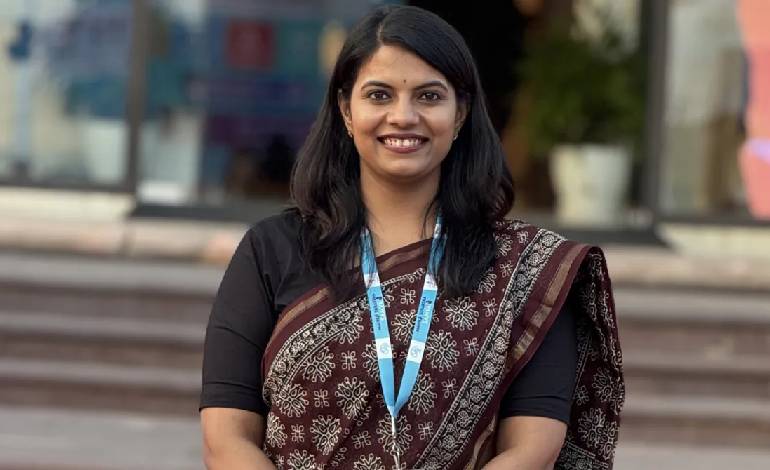
Behind the initiative is 32-year-old Shruti Shrivastava, founder-director of the foundation. A philosophy graduate from Lady Shri Ram College, Delhi, Shruti spent nearly a decade preparing for the Civil Services Examination, clearing prelims four times and reaching the interview stage once, before her journey ended on April 16, 2024.
“The UPSC journey ended the day my years-long dream shattered,” she recalls. In July 2024, she took over Sashaktikaran Foundation, which was founded on March 8, 2017, by her college batchmate and close friend Mrinalika Rathore, who had since joined the IAS in the Odisha cadre.
The foundation, which was preparing to shut down, got a second beginning. Shruti’s sister Smriti joined as co-director, while education professional Adarsh Mohandas came on board as co-founder and programme director of Project Neev.
Field visits from September 2024 revealed a common pattern — one or two teachers managing five grades, with Classes 1-3 sitting together and Classes 4-5 in another room, leaving little time for personalized learning.
Project Neev was launched in October 2024, with ground work beginning on November 14. The model strengthens government schools from within rather than creating a parallel system.
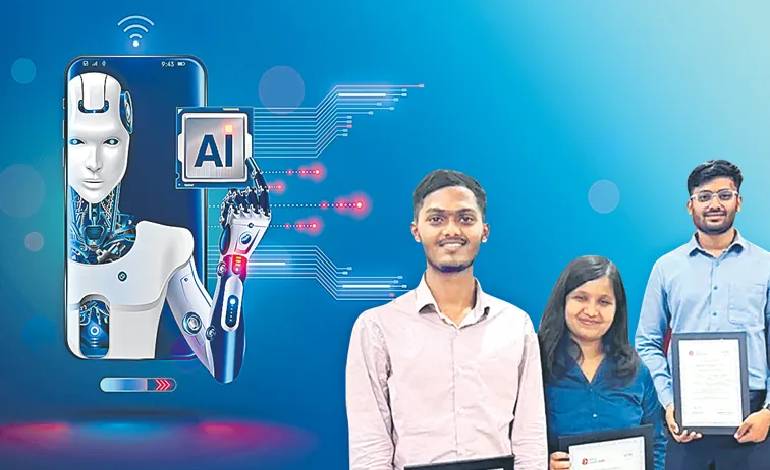
Each day, batches of five children step out for a 30-minute session with a local woman facilitator called Shiksha Saathi. Each child uses a tablet with an individual profile on Chimple, an app developed by Sutara Foundation, which allows children to learn according to their own level.“Through this project, each child learns according to their own level rather than according to their age or class,” Shruti says.
The project also created livelihoods for 30 rural women as Shiksha Saathis. The foundation deliberately did not make graduation compulsory, looking for potential facilitators rather than formal degrees.
Among them is 22-year-old Chhaya Raja of Jatauwa village, who had completed Class 12 but could not afford college. She topped the recruitment test in November 2024 and now manages learning sessions and has bought a motorbike for her family from her earnings. Savita Ahirwar from Bankhedi, who joined in August 2025, says her salary helps pay for her parents’ medicines while she continues her studies despite a physical disability.
According to the foundation, of the 900 children covered, 291 improved by at least one learning level in Hindi, 327 in English and 355 in mathematics, with some jumping up to three levels. Children attending regularly have shown 70 to 200 percent learning growth.
“We don’t want to touch lives briefly and move on. We want depth and longevity,” Shruti says, adding that the organisation, supported by nearly 200 individual donors and working with the state’s Departments of Education, Tribal Affairs and Denotified and Nomadic Communities, plans to expand carefully.