Arabian Sea humpback confirmed as distinct subspecies: Study

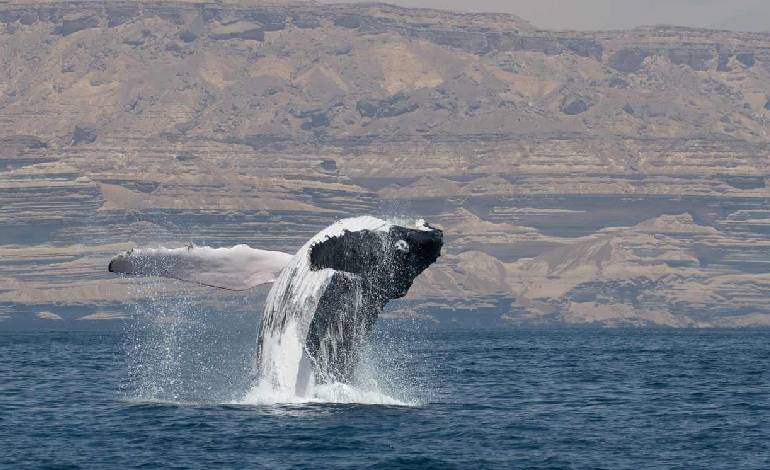
Muscat: The Arabian Sea humpback whale, known for its unique non-migratory behaviour, is a distinct subspecies, a new genetic analysis has confirmed.
Published in the journal Frontiers in Marine Science, the study leveraged more than 25 years of whale research in Oman and supports the recognition of a fourth subspecies of humpback whale.
Led by the Wildlife Conservation Society (WCS) in collaboration with Omani environmental authorities and international partners, the study compared genetic samples from Arabian Sea humpbacks with populations from across the world’s oceans, including mitochondrial DNA from 2,285 animals.
Results revealed high levels of genetic differentiation between the Arabian Sea population and the three currently-recognized subspecies of the North Atlantic, North Pacific, and Southern Hemisphere, indicating very limited gene flow between them.
The Arabian Sea population also showed the lowest genetic diversity among the ocean regions examined. The findings support its recognition as Megaptera novaeangliae indica, named for the type species in Iraq.
“Arabian Sea humpback whales have long been an enigma. Their ecology is unlike any other known humpback whale population, and this new genetic work represents an important milestone,” said lead author Dr. Rita Amaral of WCS. “The results clearly indicate the Arabian humpback whales have followed their own evolutionary trajectory for tens of thousands of years.”Researchers estimate the lineage diverged between 43,000 and 113,000 years ago.
Unlike other humpbacks, Arabian Sea humpbacks do not migrate to breed or feed. They remain in the seas off Oman year-round. Scientists attribute this to seasonal upwelling of deep nutrients driven by the southwest monsoon, which creates hyper-productive conditions normally found in temperate feeding grounds.
Their isolation is also reflected in their song. A 2018 study for the International Whaling Commission found zero overlap between Arabian humpback and Indian Ocean humpback singing, strongly indicating population isolation.
The study warned that the population’s isolation makes it especially vulnerable. Facing threats from entanglement in fishing gear, vessel strikes, underwater noise, pollution and climate-driven changes to monsoon patterns, the small population has shown no evidence of increase over the past two decades.
“The growing body of research has given Oman a clear understanding of both the importance of this population and the pressures it faces,” said Aida Al Jabri from the Environment Authority of Oman. “This evidence is now helping us move from scientific understanding towards practical conservation action.”