Three African wild dogs travel over 4,000 km in Zambia in record mammal dispersal

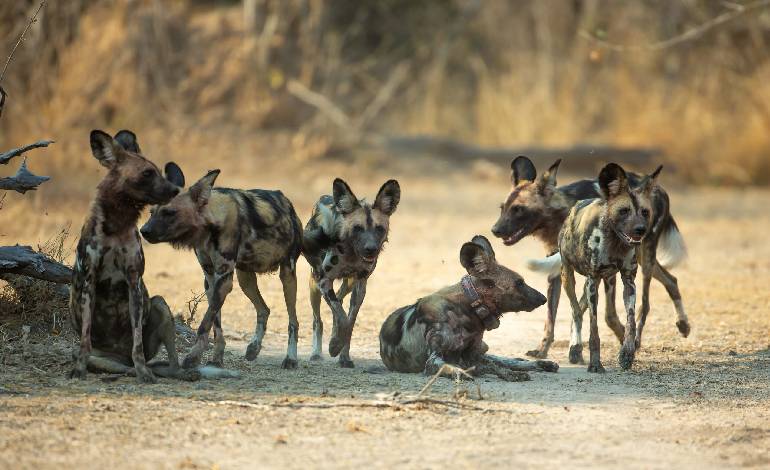
Three male African wild dogs in Zambia have travelled more than 4,000 kilometers in search of new territory and mates, in what researchers say is the longest African mammal movement on record.
The nine-month odyssey — about half the distance between Cairo and Cape Town — reveals how the endangered animals connect populations and ecosystems far apart within Southern Africa, according to a new study.
“It’s the longest African mammal movement on record, and the longest recorded wild dog dispersal,” said study co-author Matt Becker, chief executive of the Zambian Carnivore Programme.
The trio, litter mates known as the Mayukuyuku males, left their birth pack in Kafue National Park in mid-2025. They travelled east out of the park, then north toward the industrial cities of Kitwe and Ndola, doubled back, before heading east toward the Luangwa River Valley.
By April 2026, the pack had traversed 4,126 km to reach a game management area — a partially protected buffer zone — between South Luangwa and Lower Zambezi National Parks.”We think they’ve actually established a territorial range, but we haven’t quantified who they’re with and how many dogs there are,” Becker said.
The Mayukuyuku males were among 19 wild dog groups tracked using GPS collars. Some journeys ended in tragedy. A female wild dog, nicknamed EWD-1355, set off with her two sisters from South Luangwa in 2021. After travelling more than 2,300 km including through Mozambique, she was killed in a hunter’s snare set in southern Zambia.
All 19 tracked groups moved within or around seven national parks in Zambia. Four groups reached within a few kilometers of neighboring Angola, Democratic Republic of Congo, Malawi and Zimbabwe, suggesting most wild dog populations in Southern and Eastern Africa remain connected.”If we conserve and continue to improve these connections, a lot of species like wild dogs can make the rest happen,” said Nyambe Nyambe, executive director of the Kavango-Zambezi Transfrontier Conservation Area.
With landscapes changing, researchers called for improved conservation models that provide economic benefits through nature-based tourism or sustainable game ranching.”We don’t need to separate people from nature. We can have these large landscapes, large, connected areas, beneficial to both,” Becker said.