Mozambique formally protects Mount Mabu, its ‘butterfly forest’

Mozambique has formally protected Mount Mabu, a hotspot of endemic wildlife and home to more than 200 species of butterflies, located in the Lugela district of northern Mozambique.
The decree, published on August 24 by the Ministry of Agriculture, Environment and Fisheries, created the 9,341-hectare Mount Mabu Community Conservation Area, with stewardship granted to the local communities that have preserved the forest for generations.”It’s a great relief. These forests are very important because they’ve got high levels of endemism,” said Julian Bayliss, an ecologist who led several surveys over 20 years that helped build the case for protection.
Every year in October and November, hundreds of butterflies gather on the 1,700-meter summit of Mount Mabu in a mating behavior known as hilltopping. The phenomenon was documented by naturalist David Attenborough in 2013, who gave Mabu the nickname “butterfly forest.”
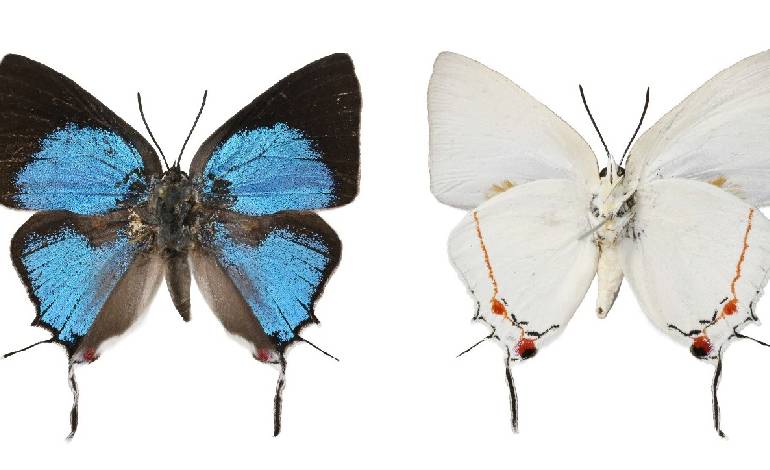
Scientists have recorded over 200 butterfly taxa at Mabu, with estimates reaching 250. Since 2005, more than 30 new species including frogs, chameleons, bats and insects have been discovered there, including the cobalt-blue butterfly Iolaus mabuensis found in 2008 and the Mount Mabu forest viper Atheris mabuensis described in 2009.
Mount Mabu hosts the largest continuous block of medium-altitude forest left in southern Africa. Its steep ridges and valleys create microclimates that have fostered unique flora and fauna over millions of years.Under the decree, the land is dedicated to protection, conservation and sustainable use of natural resources by local communities. Specific restrictions will be defined in a management plan yet to be finalized.
“All of this effort is a recognition of the community that protected the forest. The community, over a long time, kept the forest standing,” said Jose Monteiro, executive director of ReGeCom, one of the organizations working with local communities at Mabu.