Ziro Valley looks beyond music festival to celebrate its hidden Wildlife

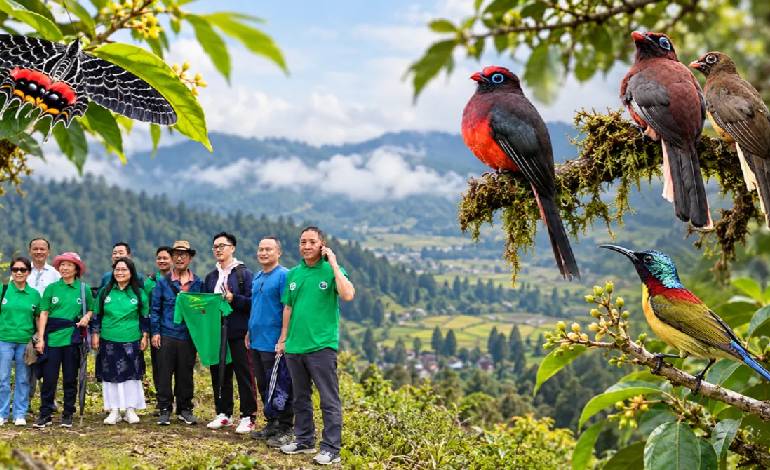
Ziro: Known for its famous music festival, sprawling paddy fields and misty landscapes, Arunachal Pradesh’s Ziro Valley has found a new reason for visitors to explore its forests – its birds and butterflies.
This October, 630 people trekked into Ziro’s lush forests for the valley’s first-ever Ziro Bird and Butterfly Festival – four days of birdwatching, butterfly spotting, nature treks and hands-on learning with conservation experts.
Organised by the Hapoli Forest Division alongside the 72nd Wildlife Week, the festival had a simple idea at its heart: help people put a name to the birds and butterflies they see, and understand why they need protecting.
Located in Lower Subansiri district, Ziro Valley is part of the biodiversity-rich Eastern Himalayan landscape, home to a remarkable variety of birds, butterflies, moths and other wildlife.
Led by Divisional Forest Officer Tilling Takar, with support from Deputy Commissioner Oli Perme, the initiative brought together forest officials, scientists, schools and community organisations.
Before heading into the forest, local school students participated in wildlife-painting, poetry and essay competitions organised with the Apatani Students’ Union. The opening programme at Saint Claret College brought together over 450 people and representatives from 19 local organisations, who pledged to protect the valley’s natural heritage.
The event featured exhibitions on local plants and animals, sessions on wildlife laws and reptile safety, alongside traditional music, boxing and martial arts demonstrations by local youth groups.
On day two, Deputy Commissioner Perme flagged off a plastic-free trek from Manipolyang to Pange Camp in Tale Wildlife Sanctuary, with a strict leave-no-waste rule.
At Pange Camp, specialists from Bird Count India, the Ashoka Trust for Research in Ecology and the Environment (ATREE), and the Wildlife Trust of India led early-morning bird walks and butterfly-identification sessions along the Orchid Trail. Evenings featured research presentations and wildlife documentaries.
The festival concluded at Pange Camp with awards for competition winners. DFO Takar expressed hope that the event would become a regular part of Arunachal Pradesh’s annual calendar.
Organisers say while a four-day festival cannot protect an entire forest, it can spark lasting curiosity – a child who learns to identify a butterfly, a resident who recognizes a bird call in their garden, or a traveller who carries the leave-no-trace habit forward.
For now, Ziro will continue to draw crowds for its music. But its newest festival has given people another reason to look up into the trees, follow a bird’s call, and discover the wildlife that has been there all along.