World’s longest pacific predator-proof fence is bringing seabirds back to Kauai

Kauai: Four years after the longest “predator exclusion fence” in the Pacific was completed, endangered seabirds are returning to nest in safety on Kauai’s north shore.
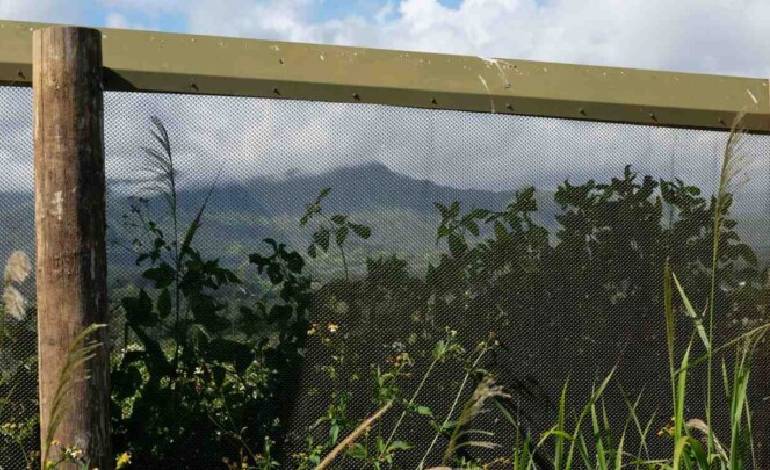
Completed in 2022, the 11,200-foot-long fence encircles 168 acres of prime nesting habitat at Kīlauea Point National Wildlife Refuge. Before it was built, nests were routinely destroyed by feral cats, pigs, rats and other invasive mammals. Now, birds are raising chicks just meters from sites that five years ago would have been deadly to them.
Designed in New Zealand, a predator exclusion fence is built to stop the Pacific’s four deadliest invasive mammals. It’s too high for cats or foxes to jump, capped with a slick, claw-proof hood to prevent climbing, lined with a rubber mat and underground skirt to block burrowing pigs, and uses fine metal mesh that rats can’t squeeze through and no teeth can chew.
The $1.7 million project was led by the U.S. Fish and Wildlife Service with local partners, modeled on a similar fence on Oahu where Newell’s shearwater chicks quadrupled in the first few years after completion.
Inside the Kauai fence, the cliffs of Nihokū and Mokolea Point now shelter a range of native species: Newell’s shearwater, red-footed boobies, red-tailed and white-tailed tropicbirds, great frigatebirds, the endangered Hawaiian petrel, and Laysan albatross. The area also protects the Critically Endangered Hawaiian hoary bat and the nēnē, or Hawaiian goose — the state bird.
The location helps too. With little artificial light and no power lines, the northern shore lets night-flying birds like petrels navigate by the stars and Moon without collision risk.“Until the island can fully contain or remove invasive animals, this fence creates a sanctuary — a veritable seabird factory — to keep these iconic aviators of the Hawaiian skies alive long term,” officials said.
Camera trap footage from before the fence showed the toll predators took on nesting birds. Today, those same areas are filled with chicks following ancestral instincts to breed and fledge safely.
Conservation groups say the Kauai project is proof that targeted habitat protection can reverse declines quickly, giving Hawaii’s most threatened seabirds a fighting chance to recover.