Wake Atoll celebrates ecological comeback after successful rat eradication

Wake Island: For most people, Wake Atoll is remembered for a World War II battle. Eighty-one years later, another battle has been fought and won on the atoll: the fight against invasive rats damaging the island ecosystem.
Wake Atoll, an unincorporated territory of the United States, is now seeing a cascade of positive ecological, infrastructural, and human health changes after the successful eradication of invasive rodents.
The project was a multi-agency collaboration between the nonprofit Island Conservation, the United States Department of Agriculture, and the United States Air Force Civil Engineering Squadron. The team confirmed that rats, long described as a scourge of Pacific islands for their rapid breeding and impact on native species, have been eliminated from Wake.
“We’re astonished and thrilled at the results of this work,” said Tommy Hall, Project Manager at Island Conservation. The project recently earned recognition from the US Undersecretary of Agriculture, noted as a model for collaborative conservation.Hall said the benefits go beyond wildlife. “They’ll also help Wake’s inhabitants thrive, now that we’ve removed the threat to important infrastructure, making food and water safe from contamination.”
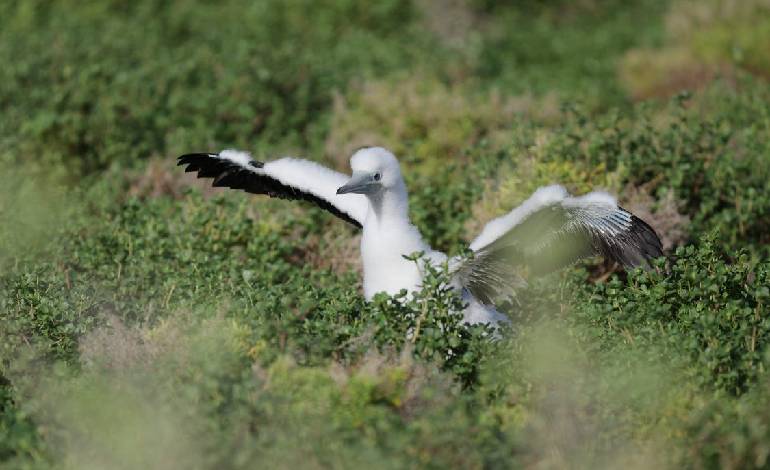
Signs of recovery are already visible. Sixteen species of nesting native birds are reappearing and increasing in number without rats preying on eggs and chicks. A newly discovered Bonin Petrel, or Nunulu in Hawaiian, colony marks the first documented nesting of the species on Wake Atoll. The atoll’s globally significant population of Sooty Terns recorded a record-breaking breeding season.
Other seabirds showing early signs of increased nesting activity and improved reproductive success include Laysan albatross, wedge-tailed and Christmas shearwater, black-footed albatross, red-footed booby, and red-tailed tropicbird.
The rebound extends beyond birds. Populations of geckos, skinks, spiders, moths, and hermit crabs have surged, all indicators of a recovering ecosystem. Vegetation is also returning. Thousands of new native Pisonia tree seedlings have emerged in areas where none were previously seen.
With rats gone, Wake Atoll is returning to its endemic state, turning a site long tied to conflict into a showcase for ecological restoration.