Venomous primate believed extinct for 100 years was hiding in plain sight all along

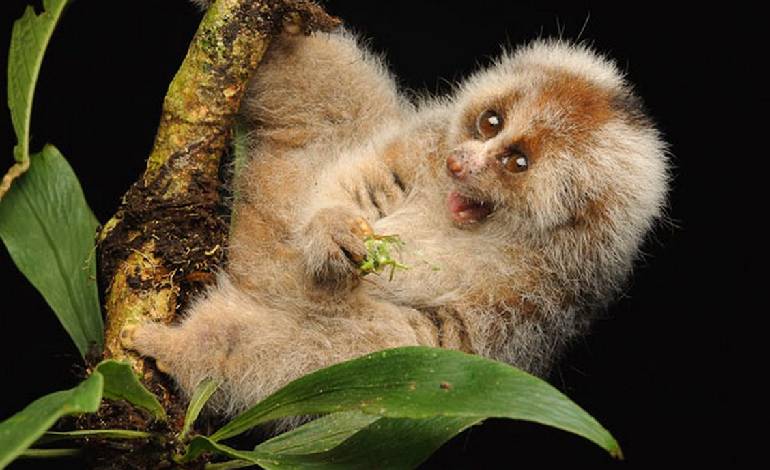
BANGKA: A venomous primate believed extinct for nearly 100 years was hiding in plain sight all along, scientists have confirmed.
The Bangka slow loris — a big-eyed, nocturnal primate and one of the world’s only venomous primates — was last documented in Western science in the 1930s. In 2015, it was listed as “possibly extinct” on the IUCN Red List.
But a new paper published in the journal Spixiana shows the species is still very much alive, thanks to a local wildlife organisation on the island of Bangka, Indonesia, that had been rescuing and returning them to the wild for years.
Between 2015 and 2025, the Alobi Wildlife Rescue Center rescued more than 90 Bangka slow lorises, 86 of which were subsequently released back into suitable forest habitat.“By presenting the data collected by the Alobi Wildlife Rescue Center on N. bancanus since 2015, we demonstrate that the Bangka slow loris still exists and is probably more widely distributed across Bangka Island than previously documented,” the authors wrote.
The first clue came from a 2022 field guide to the primates of Indonesia, which mentioned Gunung Maras National Park as a habitat of the species. That led researchers to an unpublished thesis about lorises held at the Alobi Center — and from there, it became clear the animal had never gone extinct.
The Bangka slow loris (Nycticebus bancanus) is one of the world’s only venomous primates. It produces a toxic secretion from glands on its upper arms, which it mixes with saliva when threatened to deliver a venomous bite that can cause severe allergic reactions in humans.
Despite its rediscovery, the species remains critically endangered. Its forest habitat declined by 62% between 2000 and 2012, largely due to illegal tin mining and land clearing for palm oil plantations.
Conservationists are now calling for stronger habitat protections, a formal reassessment to remove the “possibly extinct” label, and a breeding programme to secure its future.