Taiwan builds bamboo bridges to help crabs cross during migration season

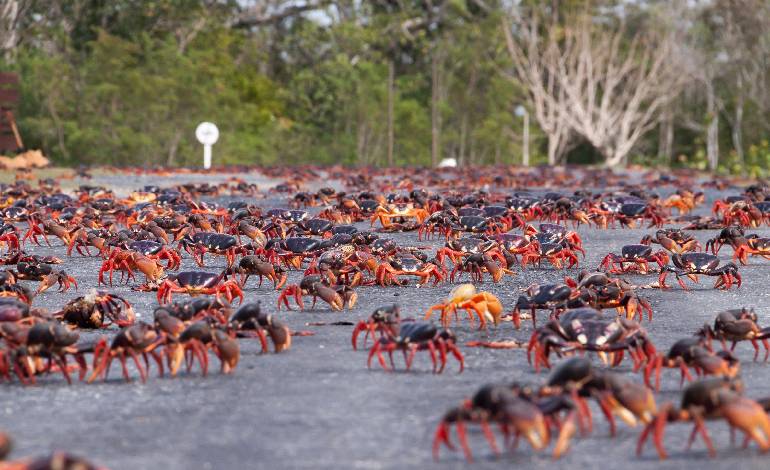
Taiwan: Every year from July to September, mangrove land crabs in Taiwan migrate from inland areas to the beaches near Taijiang National Park to lay their eggs. It is a smaller version of the famous crab migration seen on Christmas Island, but it presents the same ecological challenge.
Last year, 10,000 crabs were recorded making the journey, double the number observed the previous year. Conservationists say the increase is due in large part to community efforts to protect the crabs during their crossing.
Land development and new waterways have blocked many of the crabs’ traditional paths. To solve this, national park staff and local volunteers have built small bamboo bridges over drains and channels. Female crabs carry eggs and cannot swim, so the bridges allow them to reach the beach safely.
Because the mangrove land crab’s shell is not hard enough to damage car tires, road closures have become the main safety measure. Taijiang National Park temporarily shuts B roads when large numbers of crabs are approaching a crossing point.
Park officials say protecting the crabs also protects the wider coastal environment. “As for the mangrove land crab, it can return all of these nutrient sources back into the land, allowing the coastal forest to become more abundant,” Taijiang National Park Director Chen Jun-shan told Reuters. “So if you protect the land crabs, the entire coastal forest belt can be protected.”
The initiative relies on simple materials and local participation. By helping the crabs complete their migration, residents of Taiwan are also helping maintain the health of the island’s coastal forests.