Small trial shows immune cell therapy may suppress HIV for years without daily meds

Washington: Scientists are adapting a powerful cancer therapy to fight HIV, using patients’ own supercharged immune cells to keep the virus in check without daily medication.
In a study reported May 12, researchers said a single dose of the revved-up cells strongly suppressed HIV in two participants — one for nearly a year, the other for nearly two years — with no need for their regular antiretroviral drugs.
Today’s medicines have turned HIV from a fast killer into a manageable chronic disease, often keeping the virus at undetectable levels. But they require lifelong adherence and can be costly.
The new approach borrows from CAR-T therapy used in cancer, re-engineering immune cells to better hunt HIV. The findings are early and come from a small study, but researchers say the extended suppression without drugs marks a promising step toward long-term control.
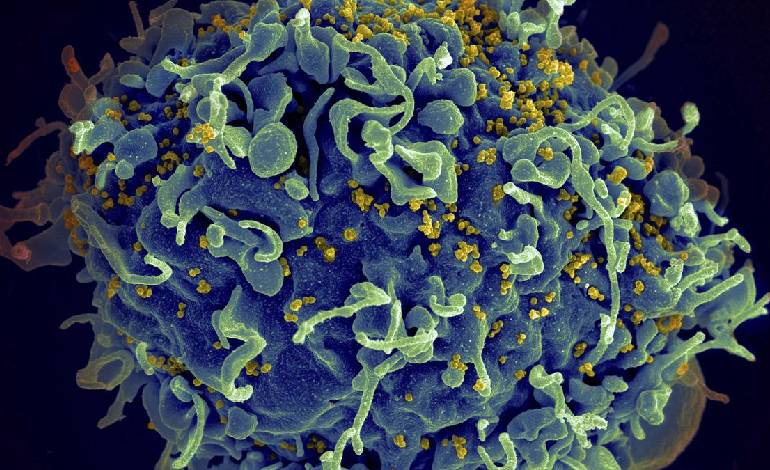
The colorized electron microscope image released by the U.S. NIH shows a human T cell, blue, under attack by HIV, yellow.