Rotterdam unveils plans for ‘shift embassy’ to inspire climate action

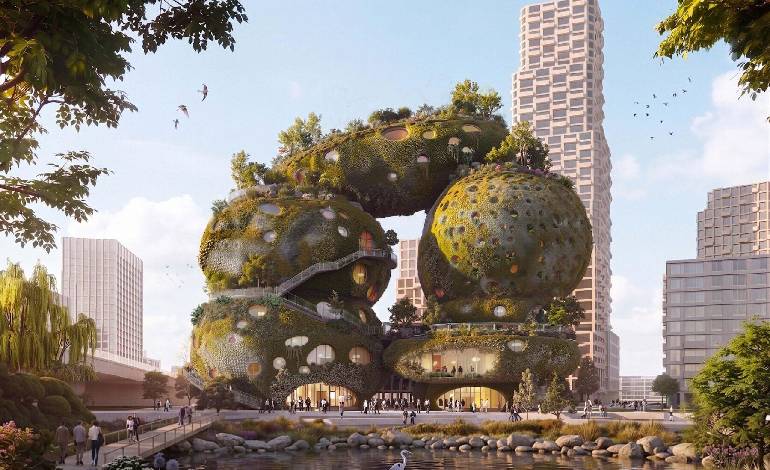
Rotterdam: Plans have been unveiled for a new landmark in Rotterdam designed to accelerate societal change toward a more sustainable future. The building, called Shift Embassy, will be located on the banks of the river Maas as part of the city’s new “nature-positive” Waterkant neighbourhood. The wider district is set to include 3,750 homes, schools, maker spaces and a new tidal park.
Dutch architecture firm MVRDV won the international competition to design the embassy with its proposal “Rotterdam Rocks.” The design was revealed on Tuesday and will now go to public consultation before construction permits are sought.
Billed as a place to move people “from complacency and powerlessness to hope, imagination and collective action,” Shift Embassy aims to use art, architecture and storytelling to showcase solutions to global challenges.
The concept comes from Shift, a social enterprise focused on scaling solutions to climate and sustainability issues. Founder Don Ritzen said the building is meant to offer a hopeful vision of the future.
“Most people, when they think about the future, they think that it’s all going to shit,” Ritzen told Positive News. “In order to bring more systemic change, we need to create places where people get inspired and get hope again, where they feel empowered to take action.”
Renders show a rocky, vegetation-covered structure containing a large exhibition space, educational areas, community event spaces and a hotel. The exhibition will highlight “global success stories in nature, energy, travel, and circularity.”
Judges said the design “brings together joy, discovery, and surprise into a new architectural language” and could “invite people to rethink their everyday behaviour.”
MVRDV founding partner Winy Maas said the building will also act as a “scale-up lab” for low-carbon construction. “We need to reduce carbon dioxide emissions and to create inclusive spaces for people, trees, plants, for water, air, and for animal habitats,” Maas said. “Our design integrates these human and natural spaces.”