Olive ridley turtles nest in California for first time, sparking historic egg rescue

In a first for the U.S. West Coast, olive ridley sea turtles have been recorded nesting on beaches in Southern California, according to a report in the LA Times.
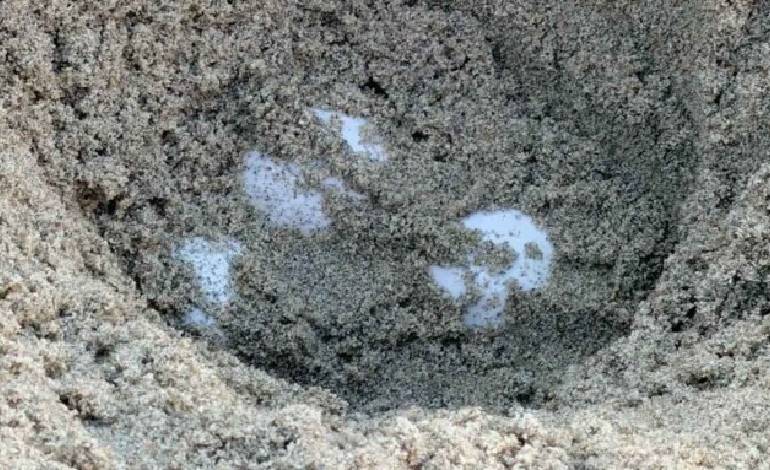
The first female emerged in broad daylight on Seal Beach — belly full of eggs — dug a nest, deposited her clutch and returned to the sea, leaving only a small trail in the sand and a couple of speechless lifeguards.
Three days later, 8 miles further north on Huntington Beach, a second turtle repeated the feat in front of surprised beachgoers.
The species has large breeding colonies in Costa Rica, Mexico and Nicaragua, but has never been seen nesting in California before.“I have been expecting to see subtropical species present off the coast of Southern California, which is typical during El Niños,” Lindsey Peavey Reeves, a senior scientist with the National Marine Sanctuary Foundation, told the LA Times. “However, I wasn’t expecting to see olive ridley sea turtles nesting in Orange County.”
The Huntington Beach Fire Department’s Marine Safety unit alerted the National Oceanic and Atmospheric Administration and the U.S. Fish and Wildlife Service. Personnel erected mesh nets over the nests and a cordon to keep the public back.
But extreme high tides and hurricanes Polo and Odalys threatened to destroy the nests last weekend. In what officials believe is California’s first turtle egg rescue, NOAA and FWS teams recovered 204 eggs from the two known nests, packed them in polystyrene coolers filled with sand, and transported them to the Aquarium of the Pacific in Long Beach.
“We had to make some quick decisions,” said Fish and Wildlife Service biologist Jonathan Snyder at the aquarium on Friday. “This is the decision that we made, and I think it’s the best one for species recovery.”The eggs, from a species listed as “Vulnerable” by the IUCN, have been placed in climate-controlled incubators to mimic beach conditions. It remains unclear if they will be viable.
Scientists suspect back-to-back marine heatwaves south of the border drove the turtles north, or that warm water temperatures guided them across the Pacific to California — a sign of adaptability as ocean temperatures rise.