Low-cost sodium-ion batteries match Tesla’s lithium cells on key performance metrics

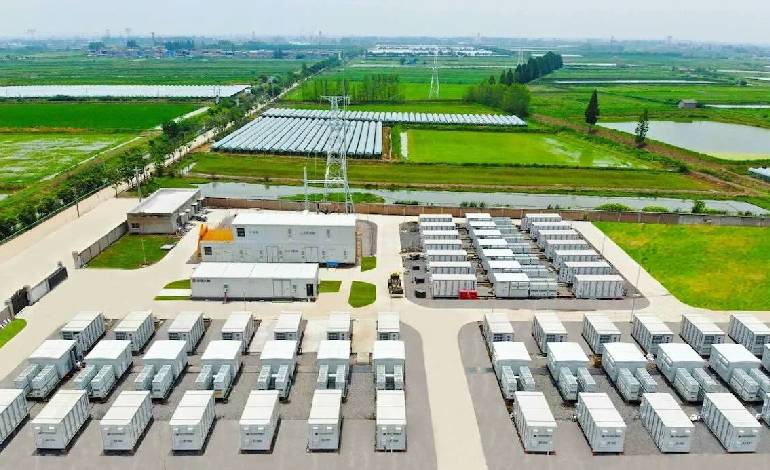
A new study has found that a low-cost sodium-ion battery already used in cars and large-scale energy storage in China performs on par with Tesla’s lithium-ion batteries across most performance and production quality parameters.
The research, published May 28 in the Cell Press journal Physical Science, was conducted by RWTH Aachen University in Germany. It examined a sodium-ion battery designed by Hina Battery, a spin-off of the Chinese Academy of Sciences that supplies EV batteries to automakers including JAC.
Because sodium is far more abundant and widely available than lithium, switching to sodium-ion could cut raw material costs for manufacturers and reduce supply chain risks tied to critical minerals, researchers said.
The study noted that with further tweaks to improve low-temperature charging and high energy density, sodium-ion cells could become a cost-effective alternative for future electric vehicle batteries.
“The combination of good uniformity, high power capability, and strong low‑temperature performance makes these cells attractive for stationary storage, grid services, and shorter‑range or commercial vehicles where potential lower cost and resource availability matter more than maximum driving range,” said Moritz Schütte, a battery researcher at RWTH Aachen University.