Johns Hopkins study finds ‘second layer’ of inheritance beyond DNA sequence

Scientists say they may have found a major reason why some genetic risk is still missing from current studies — and it’s not in the DNA sequence itself.
A team led by researchers at the Johns Hopkins School of Medicine has found that several inherited traits in the mouse genome break the rules Gregor Mendel laid down in the 19th century about how genes work. The findings were reported recently in Nature Genetics.
The study shows the changes are not due to gene mutations. Instead, they are caused by chemical modifications of the genome. These modifications can jump across generations, change depending on whether an animal is male or female, and even copy themselves from one copy of a gene to another.
The researchers say this “second layer” of inheritance could explain why genome-wide association studies — an increasingly popular kind of study that looks for genetic variants linked to diseases — may be missing a significant fraction of heritable variation. That’s because that variation is not in the sequence.
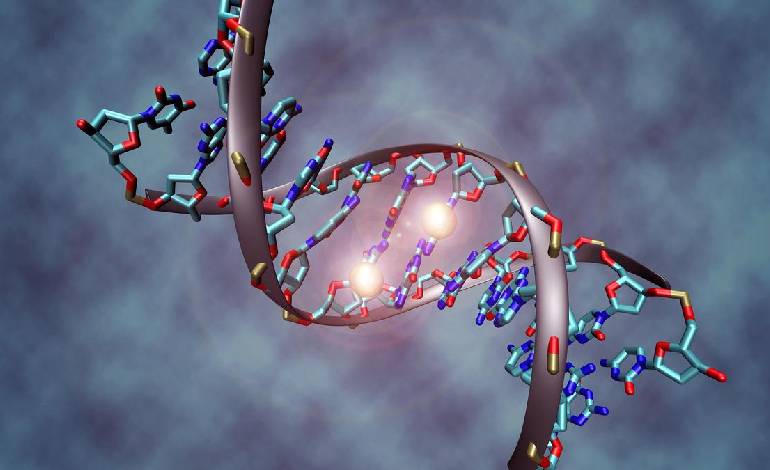
The modifications involve processes like methylation. In the accompanying image, methyl groups are shown as two white spheres bound to cytosine nucleotides in a DNA molecule.”If DNA is the instruction manual, we just opened a big second volume,” the findings imply.