Jharkhand farmer builds India’s first spineless cactus nursery after orchard fire

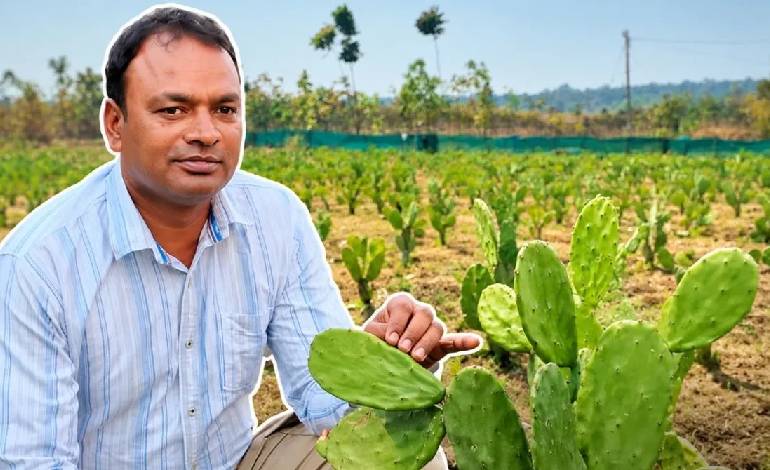
Jharkhand: In 2020, farmer Chaitanya Kumar Ganjhu, 43, leased 36 acres in Bichara village and planted 100 litchi, 300 mahogany and 900 mango trees. Three years later, a fire destroyed the entire orchard before the trees matured. With no insurance or police complaint, he lost everything.
The setback pushed him to try something new. In 2024, after learning about government support for cactus farming, he contacted ICARDA and bought 10,000 cladodes of spineless cactus Opuntia ficus-indica. He planted them on 2.5 acres in Gamhariya Jaltanda, becoming the first farmer in Jharkhand to grow it at this scale.
The crop suited Jharkhand’s dry, poor soil. It needs little water, survives harsh summers, and has no thorns, so it can also be used as fodder. Today his nursery produces nearly 2 lakh plants a year across 25 varieties. High-yield types from Brazil give up to 10 cladodes annually.
What began as an experiment turned into business. From one Rs 10 cladode, he grows 6-8 saplings that sell for about Rs 60. After costs, he earns roughly Rs 25 profit per cladode. Last year he sold 30,000 saplings. He also employs around 60 local women to help prepare them.
Experts say the crop fits the Viksit Bharat push for climate-resilient farming. Jharkhand plans to plant 2 lakh cactus plants across 400 hectares. Ganjhu aims to supply them and scale to 4 lakh saplings, a business worth nearly Rs 40 lakh.
Neighbours are already following. Last year 15 farmers from Raniyan village took saplings from him. Under a 2025 state project with ICARDA, about 40% of farmers have successfully started plantations.
For Ganjhu, the goal is bigger than farming. He wants to build a cooperative for processing cactus into biogas, fertiliser and bio-leather. From losing an orchard to ashes to growing a new crop, he now hopes spineless cactus will turn degraded land in Jharkhand and nearby states into livelihoods.