Hyderabad neighborhood brings back 20,000 sparrows once lost to the city

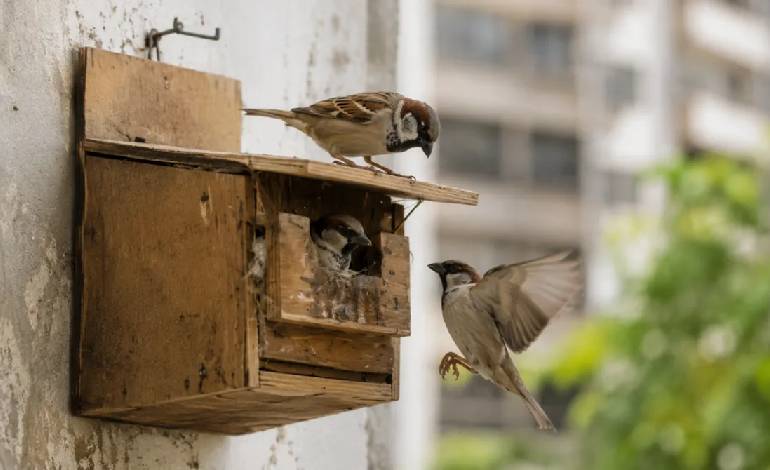
Hyderabad: Once a constant presence in Indian homes, the house sparrow has been quietly disappearing from cities. Now, one Hyderabad neighborhood is showing how to bring them back.
A grassroots effort has helped restore an estimated 20,000 sparrows to the area, countering a decline linked to modern urban design. The house sparrow evolved alongside human settlements, nesting in the ventilators, tiled roofs, and small gaps of older homes. It became a marker of environmental health. But glass-and-concrete buildings have left the bird with few places to nest, driving sharp drops in urban populations.
Recent surveys in Thiruvananthapuram and other cities show similar patterns.“Modern architecture plays a decisive role here. Today’s structures are sealed, smooth, and inhospitable for the sparrow,” told bird researcher Sujan Chatterjee. He notes the decline is not uniform — sparrows still exist in many non-urban and semi-urban areas — but cities face the real crisis.
In Hyderabad, residents and experts tackled the problem directly: installing thousands of nest boxes, creating grain and water stations, and growing native plants to support insects sparrows feed their chicks. The approach treated the sparrow as an “indicator species” — its return signaling broader urban ecosystem recovery.
Experts say the model shows what it will take to reverse the trend: small architectural tweaks, community involvement, and habitat access. As one bird expert put it, bringing sparrows back means giving them a way back into our homes.