How sperm whales use bubbles to sleep without floating to the surface

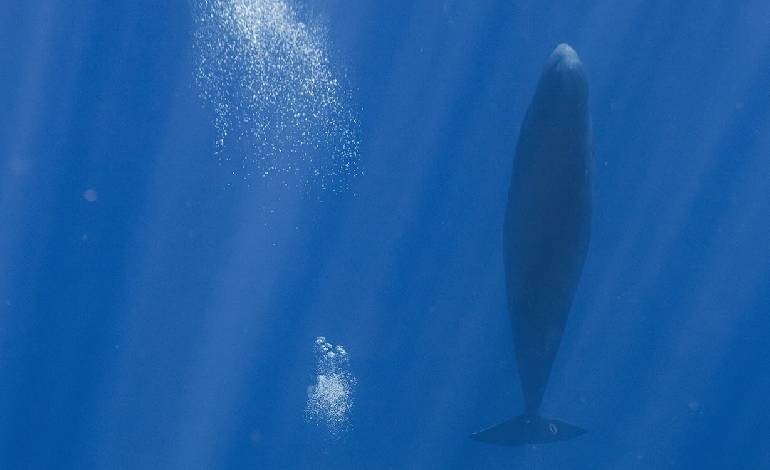
Scotland: New research shows that blowing bubbles helps sperm whales to sleep soundly beneath the waves. The bubbles actually stop the ocean giants from floating to the surface during nap time.
While little is known about how sperm whales sleep, researchers believe they doze underwater for 10 to 15 minutes at a time with their heads facing upwards. This keeps them away from the choppy surface waters, while still keeping them close enough to get air if needed.
But one question has long puzzled scientists. A sperm whale’s head is massive — taking up nearly a third of its body — and filled with oil, wax and air. Those materials float. So how does the species stay underwater without popping to the surface like a cork while it sleeps?Now we know. Researchers from the University of St. Andrews in Scotland and the University of Neuchâtel in Switzerland used high-tech underwater equipment to investigate.
They fitted suction devices to whales that could record whether they were asleep and also capture the sound of bubbles released from the blowhole. The equipment also tracked how deep the whales were and whether their heads were facing up or down.
The team affixed the recorders to 42 sperm whales in the Lofoten Islands off the coast of Norway, then recovered the devices for analysis.The study found that sperm whales rest in three main ways. They can put their head down and dive a bit before their buoyant heads turn up toward the surface. They can also sink gently, tail-first, about eight meters down. Or they can rest as they ascend from deep dives of more than 200 meters.
The findings, published in the Journal of Experimental Biology, showed that whales dozing closer to the surface blew more bubbles in their sleep — around 11 times per power nap. Those drifting up from the depths only blew bubbles three or four times during their restful ascent.
According to the researchers, the difference comes down to oxygen and buoyancy. Deep diving means whales need a lot of oxygen, explained study co-author Professor Patrick Miller of the University of St. Andrews. But water pressure compresses the air in their lungs, making them less buoyant. “This means they need to blow fewer bubbles to stop themselves from floating upwards,” he said.
However, when whales rest closer to the surface, the air in their lungs can cause them to rise. Blowing bubbles releases some of that air, making them less buoyant in the process.
It is still not clear if blowing bubbles is a conscious decision. Study lead author Noémie Freymond from the University of Neuchâtel said no one knows whether sperm whales sleep like humans, or like dolphins, with one half of the brain awake while the other snoozes.
“Blowing bubbles to make sure they don’t come too near the surface requires the whales to sense their environment and realize that they are coming too close to the surface,” she said. “Whether they turn out to be partially awake or fully asleep, sperm whales have definitely come up with a creative solution to ensure a restful slumber beneath the waves.”