How bees keep their cool as temperatures soar

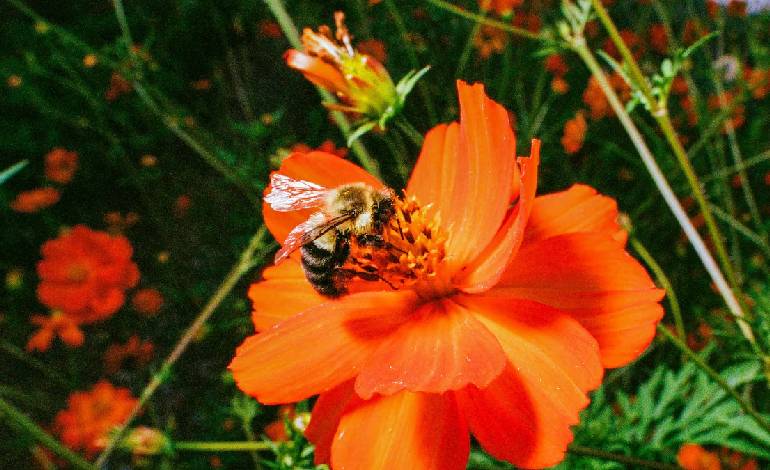
As heat waves become more frequent, bees are spending less time pollinating and more time trying to survive — deploying one of nature’s most sophisticated cooling systems.
When a honeybee colony overheats, worker bees switch jobs. Instead of collecting nectar, they collect water and spread droplets across the honeycomb while others line the entrance and beat their wings as fans to create airflow and evaporative cooling. The goal is to keep the brood chamber at 34-35°C, the narrow window needed for larvae to develop normally. Above 35°C, larvae risk deformity or death.
New research shows that system is now failing in extreme heat. A study of Arizona hives during temperatures exceeding 40°C found young bees at the outer brood edges spent nearly 8 hours a day outside the safe range. Colonies exposed to higher peaks and greater internal swings shrank in size.
The study found larger colonies fare better — maintaining internal temperature within about 6°C versus 11°C swings in small hives — because more workers can fan, shield heat by pressing their bodies against hot spots, and then dissipate that heat through their bodies, much like blood vessels.
Bees also cool themselves individually. Bumblebees transfer heat from their chest to their abdomen via hemolymph, slow their wing-beat frequency by 16% when it goes from 20°C to 40°C, and use the airflow from hovering to avoid overheating in under two minutes.
But climate projections warning of a 2.7°C to 4°C rise by century’s end, plus higher humidity that weakens evaporative cooling, could overwhelm the strategy.
For beekeepers, researchers recommend shade, water sources with landing stones, and better-insulated hives. For the public, National Geographic notes you can help by providing shallow water and leaving natural shade — because when it is too hot, bees simply stop foraging and the colony goes hungry.