From Silicon Valley to soil: How one man is rebuilding nature in India’s cities

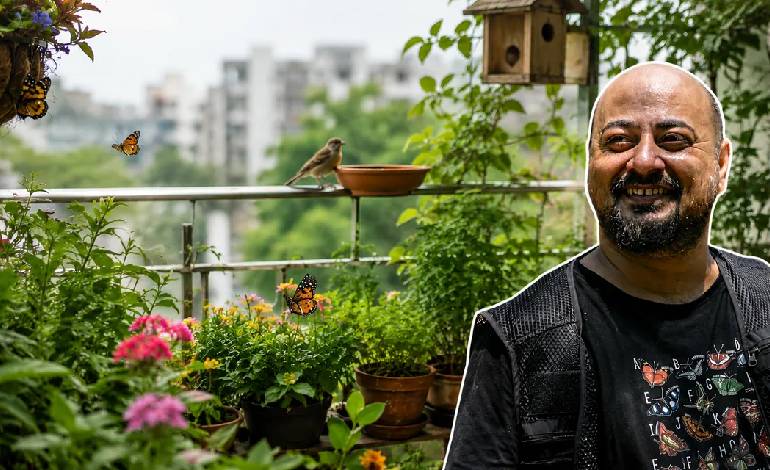
New Delhi: For conservationist Sohail Madan, 43, childhood memories of cleaning insects off car windscreens on highway trips have become a warning sign. “Children today will probably never know what that looked like,” says the founder and director of WildTales Foundation. He calls it one of the best reminders of how much wildlife we have lost.
That personal loss is backed by data. The State of India’s Birds 2023 report found nearly half of assessed bird species are in long-term decline, with around 178 species of conservation concern. Global studies also show sharp drops in insect populations due to habitat loss and chemical use. For Madan, it’s something he has seen first-hand in Delhi.
Madan’s path to conservation was not planned. Born in Africa to doctor parents and later based in Delhi, he studied engineering at San Jose State University and worked in Silicon Valley. But a visit to a self-sustaining farm in Santa Cruz changed him. He left tech in 2010, joined the Bombay Natural History Society, and spent 13 years on projects across India. In April 2023 he founded WildTales to focus on restoring nature in forests, neighbourhoods and school campuses.
A turning point came at Delhi’s Asola Bhatti Wildlife Sanctuary, once damaged by mining. Working there taught him that restoration is not just about planting trees. It’s about rebuilding relationships between plants, insects and birds. He also faced a practical problem: most nurseries sold ornamental imports, not native species. So his team built a nursery that now produces nearly 10 lakh native saplings a year for restoration projects across Delhi.
Madan says the biggest ecological break happens when we replace native plants with decorative ones. Many butterflies like the Common Mormon lay eggs only on specific host plants such as curry leaf. Remove those plants and the butterflies disappear too. “When we replace native plants, we’re not just removing one species. We’re breaking relationships that have developed over thousands of years,” he says.
To address this in cities, WildTales launched the Delhi Butterfly Corridor Project. Instead of one big park, the team encouraged schools, hospitals, societies and homes to plant small patches of butterfly-friendly natives. These act as “stepping stones” for pollinators to move across the city. At a government school in RK Puram, students turned their campus into an outdoor classroom and documented species. The teacher leading it won the Best Teacher Award in 2022.
Madan says anyone can help, even with just a balcony. His 5 suggestions: skip chemical pesticides, grow native plants like curry leaf and milkweed, add fruit trees for birds, keep water out year-round, and allow gardens to be a little untidy so insects have shelter.
“Wildlife is already around us,” he notes. “Delhi has more than 400 bird species. The question is whether we’re making room for it.” He also stresses the human benefit: “We are animals of the forest. Being surrounded by green is good for our physical and mental wellbeing.”While windscreens may never be covered in insects again, Madan believes small choices can bring nature back. “Put a chair in your garden. Have your morning tea there. The more time you spend outdoors, the more you’ll notice the life around you.”