From ordinary grass to extraordinary resource: How bamboo is building livelihoods in Assam

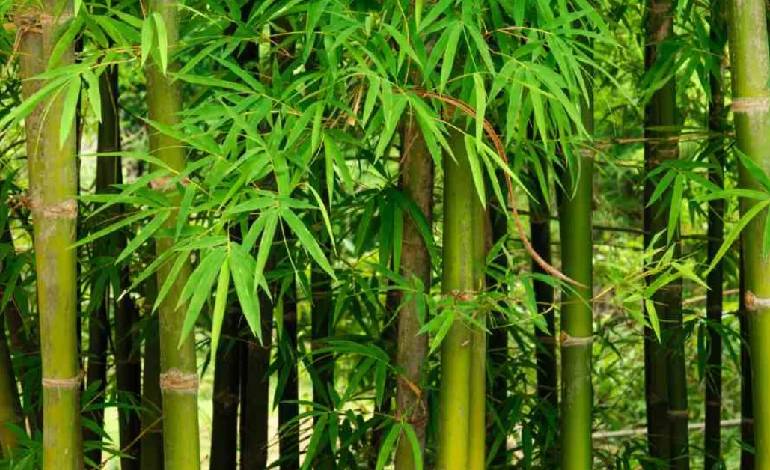
A plant that often grows unnoticed beside homes and across the hills of Assam is emerging as a versatile resource for furniture, housing, food, paper and livelihoods.
India is home to 136 bamboo species, of which 125 are indigenous. According to the Government of India, the country has 13.96 million hectares under bamboo and is the second richest country in terms of bamboo diversity.
That versatility is visible in Jorhat, Assam, where entrepreneur Prabhat Saikia set up a small bamboo and cane handicraft unit in 2006. What started as a local workshop now employs around 20 young artisans making furniture and decorative pieces, helping them find work without migrating to cities.
Working with the Rainforest Research Institute in Jorhat, Saikia trained in bamboo treatment techniques to improve durability, allowing the material to be used for furniture, cottages and architectural spaces.
According to the National Bamboo Mission, bamboo is used for construction, furniture, flooring, doors, windows, frames and trusses. The Indian Institute of Wood Science and Technology notes it can be harvested in a two-to-four year cycle and has over 1,000 documented applications.
In many parts of the Northeast, bamboo has long been used for walls, roofs, flooring and structural components, while modern processing has enabled laminated panels and engineered products.
Beyond construction, certain species produce edible shoots, while bamboo is also processed into food containers, pulp and paper, and textile fibre.
Its environmental value is also significant. The Office of the Principal Scientific Adviser notes that a bamboo-based conservation system can reduce soil loss from 22 tonnes per hectare per year to 4.5 tonnes and conserve 45% soil moisture, while producing 12-30 tonnes of biomass per hectare annually.
As of December 2024, the National Bamboo Mission reported 528 product development and processing units and 104 treatment and preservation units across the country.
For artisans like those in Saikia’s workshop, bamboo is not just a raw material, but a source of sustainable livelihood.