Blue crabs making comeback in Chesapeake Bay with population at 6-year high

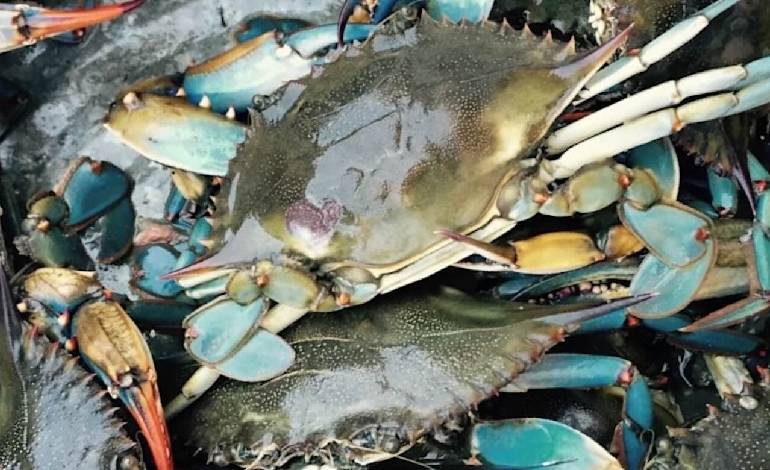
Chesapeake Bay: Conservationists working to turn the tide on declining numbers of blue crabs in the Chesapeake Bay have found some good news in their latest field surveys.
After years of worryingly low numbers, the population appears to be responding to measures implemented to build a crustacean comeback.
This year’s field sampling estimated a total population of 349 million blue crabs in the bay — a 46% increase over last year, according to the annual winter dredge survey.
This raised the population to the highest it’s been since 2019, says the report from the Maryland Department of Natural Resources and Virginia Institute of Marine Sciences.
The population of juvenile crabs in winter 2025-26 was estimated to be 228 million, which is also the highest since 2019.
The largest estuary in the US, spanning 200 miles from Maryland to Virginia near Washington DC, the Chesapeake supports more than 3,600 plant and animal species — and the crab remains a cornerstone of the region’s heritage and culture.
In the past 30 years, the surface water temperature of the Chesapeake Bay has increased 1.8 degrees Fahrenheit, but climate change isn’t the only cause of the crab conundrum. Human industrialization and invasive species also play a role.
Invasive ‘blue catfish,’ introduced in the 70s for recreational fishing, are hunting and digging up dormant blue crabs year-round.
Although recreational and commercial fishing was once a major contributor to falling numbers, catch limit laws from Maryland and Virginia have helped. Separate research from the 2026 Chesapeake Bay Blue Crab Assessment and Advisory report showed no overfishing in the bay.
The numbers can go up and down abruptly due to many factors, but neighboring states and federal agencies continue to share data and commit resources to ensure a healthy ecosystem.
And their efforts are paying off. Maryland just released a new report confirming the abundance of underwater sea grasses in the Bay. Seagrass coverage — critical for the Bay’s health — expanded from 36,799 acres in 2024 to 41,419 acres in 2025 in Maryland, an increase of nearly 13% in a single year.
Bay-wide, acreage reached an estimated 89,385 acres — up 7% from 83,252 acres in 2024.