At 16, Pune student creates ‘Glow Guide’ for burn and acid attack survivors

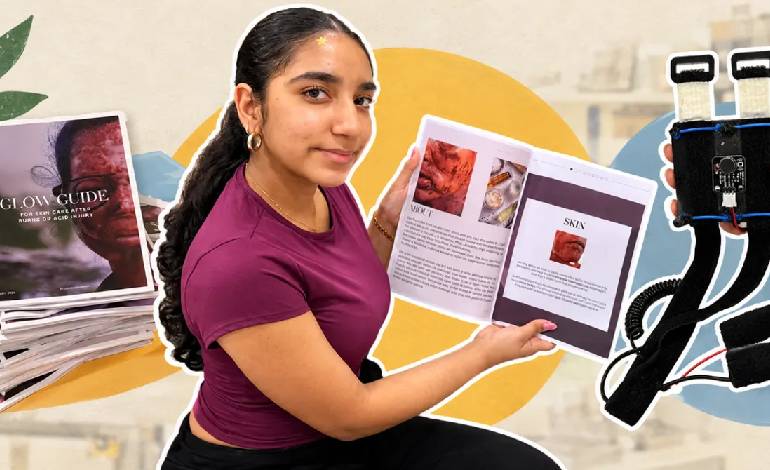
Pune: At eight, Sia Domkundwar remembers scratching her scalp until it hurt. A bacterial infection had left her with painful boils and clumps of hair falling out. There was no diagnosis, but it changed how her family thought about skincare. Shampoo labels were studied, ingredients were questioned.
Nearly a decade later, that early lesson has led the 16-year-old Pune student to build a resource that may change recovery for many others. It is called The Glow Guide – a 60-page, trauma-informed, survivor-led guide designed for burn and acid attack survivors navigating everyday self-care after treatment ends.
What began as a mentored internship project through BuildUp, an internship programme that places students into real-world problem-solving, is now being shared with hospitals across India.
The guide does not prescribe or recommend medication. It is designed as a recovery-stage, everyday-care guide to complement medical treatment, not replace it. It focuses on the practical questions that often come up after discharge – skincare, clothing, hygiene, cosmetics, nutrition, hair and scalp care, nails and hands, and other aspects of daily life.
It brings together information across three categories: dermatologist-led and small-batch brands, relevant service providers, and NGOs and hospital programmes useful to survivors. It also includes an ingredient safety decoder and a “Glow Directory” of survivor-vetted products, professionals and NGOs.
There is no commercial affiliation. The guide is intended to remain free and accessible, and is currently available in English.
The idea took shape after Sia was introduced to the Chhanv Foundation, which supports acid attack survivors with rehabilitation and long-term care. She interviewed around eight survivors and expected to hear about surgeries and pain. Instead, she heard about sunlight, clothes that hurt, skin grafts that reacted unpredictably, and not knowing which creams were safe or whether makeup would cause irritation.”I observed that there was a gap in the non-prescription, non-medicated, everyday care and products they need for their bodies,” Sia says.
One of those survivors was Anshu. From a village background, her family had been told to keep the skin dry initially to avoid infection, and later advised sunscreen and moisturisers, but beyond that there was little guidance. “Apart from the doctor, there was no one to guide us,” Anshu says. “If this guide had been available when I was recovering, it would have made things much easier.”
Building the guide was complicated because advice often conflicted – what soothed one person irritated another. That inconsistency shaped its design. Rather than prescribing, it informs.For Sia, the work is also about agency. In her conversations, survivors were not trying to hide what had happened. They were dressing up, wearing makeup, experimenting with nail art. “The survivors all said they love their face and feel beautiful,” she says. “But for them, the meaning of beauty has changed.”
Anushka Desai, a trauma therapist who assisted with the guide, says the medical system is focused on treating the injury, but recovery doesn’t end with physical treatment. “Healing isn’t always just about your skin or your scars. It’s also about feeling like you’re safe in your own body, as well as safe in your own surroundings,” she says. After violence takes away choice, even small choices – like wearing long, red nails, as one survivor loved to do – become a way of reclaiming identity.
Today, The Glow Guide has been shared with the Chhanv Foundation and is being circulated to 10 hospitals across India, including Shrishankara Superspeciality Hospital in Nanded, Maharashtra. There are plans to build a digital presence to make it easier for survivors and caregivers to access.”They said it helped them think not about what to remove from their lives, but what to add,” Sia says.