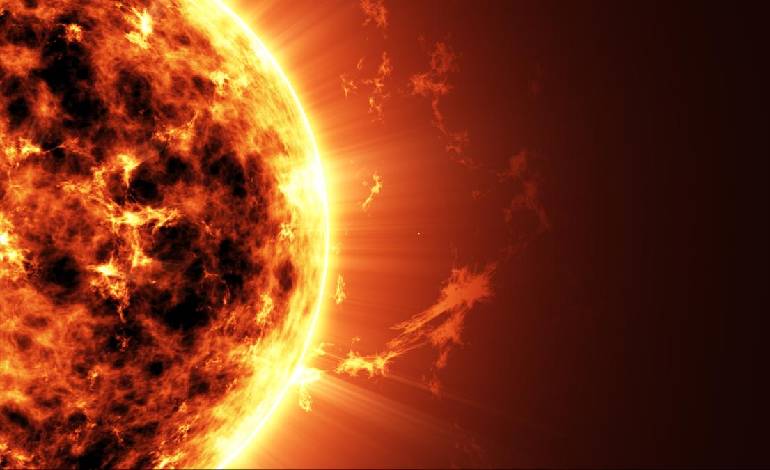
Magnetar could prove empty space is not really empty

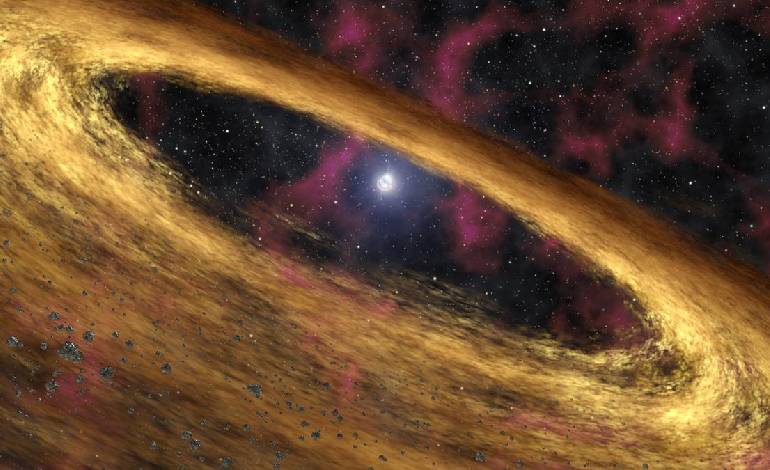
Quantum physics has made numerous strange predictions, and scientists have checked and confirmed many of them. But one of the strangest ones persists unresolved.
In the 1930s, German physicists Werner Heisenberg and Hans Heinrich Euler proposed that empty space is not really empty. Instead, they predicted that in the presence of a magnetic field, the vacuum of space would behave like a crystal, changing the properties of light passing through it.
The trouble with testing this prediction — called vacuum birefringence — is that the magnetic field has to be extraordinarily strong.
The work could prove the ‘nothingness’ of space is actually a complex and active medium and help scientists refine their maps of the universe.