White-tailed sea eagle chick fledges at Fota Park, first in over a decade

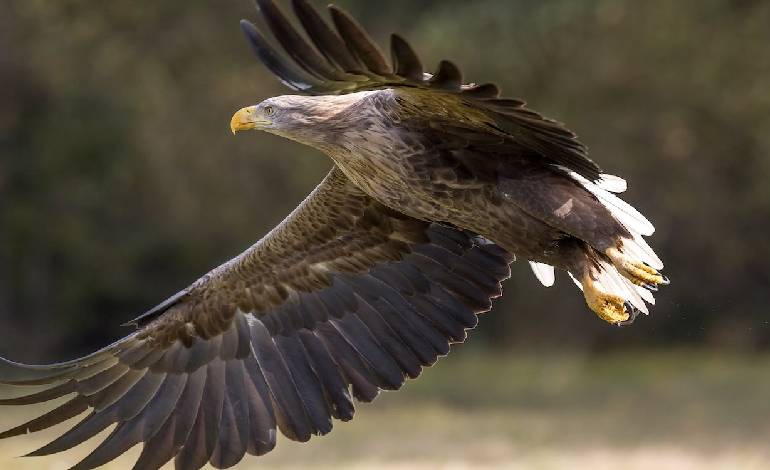
More than a century after white-tailed sea eagles disappeared from Ireland, Fota Wildlife Park has announced the successful fledging of an eaglet — the first of the species born at the park in more than 10 years.
The chick hatched on April 13 to resident parents Áine and Tony. According to caretakers, the pair have taken naturally to raising Europe’s largest eagle.“The mother and father have done a great job,” said Jess Hodnett, Fota Wildlife Park’s Native Species Conservation Officer.
The fledging is no small feat. Adult white-tailed sea eagles have wingspans of more than 8 feet, or 2.5 meters. During breeding season, parents must eat 18-21 ounces of food every day to support their growing chick.
The birth carries particular significance for Ireland. White-tailed sea eagles were once common along the country’s coastline but were wiped out by human persecution. The species remained absent for more than a century.
Efforts to bring them back began in 2007, when Ireland’s National Parks and Wildlife Service, working with the Norwegian Institute for Nature Research, farmers and local communities, began releasing the birds. More than 200 eagles have now been released around the country. The recovery effort has reached a key milestone, with Ireland’s population now considered self-sustaining.
Fota Wildlife Park has participated in white-tailed sea eagle conservation since 1991 and has now successfully bred six chicks. Hodnett said staff hope the youngster will eventually join a European endangered-species breeding program, allowing this Cork-born eagle to contribute to conservation beyond Ireland.
For Fota’s team, the eagle is part of a broader conservation push. The park is also working with other vulnerable native species, including curlews and the endangered white-clawed crayfish.
Its work with the natterjack toad has also seen major results. The park collects toad spawn from ponds in County Kerry and raises the young through their most fragile stages before releasing them. Since 2016, more than 13,600 natterjack toadlets have been released, with another 750 expected this August.