Georgia records highest loggerhead sea turtle nest count in 37 years

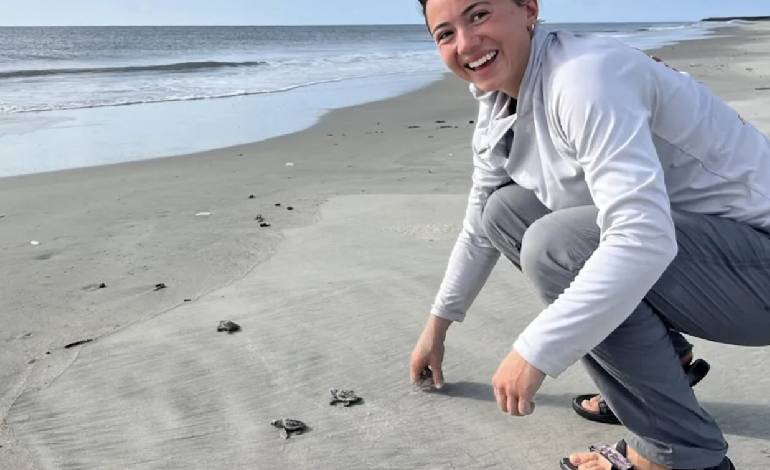
Georgia: Loggerhead sea turtle nests along Georgia’s Atlantic coast have set a new 37-year record. The annual count has surpassed every total recorded for the state’s beaches since monitoring began in 1989.
According to the Georgia Sea Turtle Cooperative, the nest count passed 4,110 last week. That’s the highest number on record, topping the previous high of 4,071 nests set in 2022. The 2022 total was already nearly double the goal set in the original federal recovery plan for the species. The Georgia Department of Natural Resources called the milestone “a slow but steady rebound” for the turtle, which has been listed as threatened under the Endangered Species Act since 1978.
Officials say the rebound is the result of decades of conservation work. Members of the Georgia Sea Turtle Cooperative patrol barrier island beaches at dawn each day to mark and protect new nests. The use of “turtle excluder devices” in shrimp trawler nets since 1990 has also helped reduce accidental deaths at sea.
Wildlife biologists note that recovery takes time because loggerheads develop slowly. “Loggerheads are a long-lived species and don’t reproduce until they’re 30-35 years old,” said Mark Dodd, senior wildlife biologist with DNR’s Wildlife Conservation Section and Georgia Sea Turtle Program Coordinator. Despite that, the population has shown steady growth. Overall, the Atlantic nest count in Georgia has increased by about 4% annually since the early 1990s. In fact, the record has been broken twice in the last five summers. The population has also swung sharply over the years — the state recorded a low of just 358 nests in 2004.
From May through mid-August, adult female loggerheads, which can be more than 3 feet long and weigh up to 300 pounds, come ashore at night to lay clutches of about 100 ping-pong ball-sized eggs in sand dunes. The turtles spend nearly their entire lives at sea.
DNR officials are encouraged by the trend. If current protections remain in place, nesting numbers could eventually reach levels not seen in Georgia since the 1950s. If current projections hold, numbers may plateau first before beginning to grow again.