Female pied flycatchers ‘eavesdrop’ on male songs to avoid cheaters

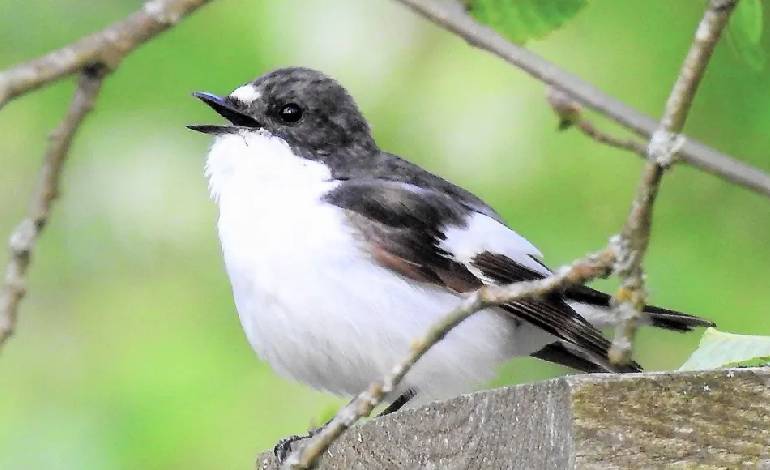
Oslo: Some female pied flycatchers are tuning in for red flags in a potential mate’s song to avoid ending up with a less committed partner, new research shows.
A study published July 1 in Ethology found that male pied flycatchers (Ficedula hypoleuca) change their song after they mate — and females use those changes to tell if a male is already paired.
Researchers led by ethologist Helene Lampe of the University of Oslo recorded 17 wild males twice: first while they were bachelors, and again after they had mated and set up a second territory to court other females. Using bioacoustics software, the team found two key differences.
Songs became shorter, dropping from about 2 seconds to 1.7 seconds. And males repeated syllables far less often. “Usually, a male will cycle through his song syllables in an orderly manner,” Lampe said. “But when they become polyterritorial, they do it much less often.”
The team suspects shorter songs may help males avoid detection by their first mate, who can recognize her partner’s song and chase off rivals. Less syllable repetition may instead be a signal to rival males — a “territorial ‘Keep Out’ signal,” said behavioral ecologist Stephen Nowicki of Duke University, who was not involved in the work.
To test if females notice, researchers played recordings of bachelor and mated males in outdoor aviaries. Most females — 21 out of 29 — preferred the nest box next to a bachelor’s song. That preference vanished when scientists edited bachelor songs to sound like those of mated males.
The findings align with earlier research showing most female pied flycatchers prefer unmated males. For females, the stakes are high: a male splitting time between two nests provides less help raising chicks.
Nowicki notes the males aren’t necessarily “cheating” on purpose. “It’s just selection acting on them to increase their reproductive success,” he said.