Georgia’s Okefenokee Swamp added to UNESCO World Heritage List

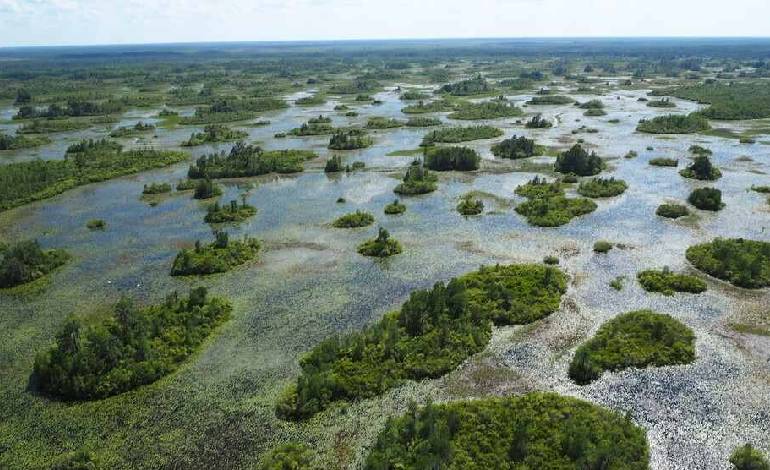
Atlantia: Georgia’s Okefenokee Swamp has been added to UNESCO’s World Heritage List, becoming the latest natural wonder in the US to receive the global recognition.
It joins iconic sites like the Grand Canyon, Sequoia, Everglades, and Yellowstone National Parks on the list. The designation highlights the swamp’s stunning biodiversity and its importance as one of America’s largest “blackwater” wetlands.
Most of the swamp lies within the 403,000-acre Okefenokee National Wildlife Refuge, the most-visited National Wildlife Refuge east of the Mississippi River.
Conservation efforts in the area date back to 1918, after an estimated 1 million cubic meters of timber had already been logged. The federal government acquired most of the swamp in 1936 for refuge purposes, and it was officially designated a National Wildlife Refuge a year later.
Over the decades, it earned additional protections as a Federal Wilderness Area and a Wetland of International Importance under the Ramsar Convention. In 2023, the Georgia branch of the National Park Service nominated it as the state’s first prospective entry for UNESCO’s World Heritage List.
UNESCO describes Okefenokee as the largest lowland freshwater peatland in the subtropical zone worldwide. It is also one of the most intact ecosystems in the North American Coastal Plain, a global biodiversity hotspot.
The site includes a mosaic of wetlands, savannahs, and forests. It is home to significant areas of endangered longleaf pine, of which less than 3% remains in the wild. The refuge supports at least 856 plant species, 48 mammal species, 238 bird species, 39 fish species, and 90 reptile and amphibian species.
Its extensive peat deposits serve as an archive of paleo-environmental history and provide critical carbon storage. The swamp also offers key habitat for migratory birds, threatened species, a large population of American alligators, and a remarkable diversity of carnivorous plants.
Shaped by a 20-to-30-year cycle of drought and fire, the Okefenokee’s unique landscape is maintained by the ongoing interaction of water, fire, vegetation, and wildlife.