Captive elephants can relearn how to live wild, study finds

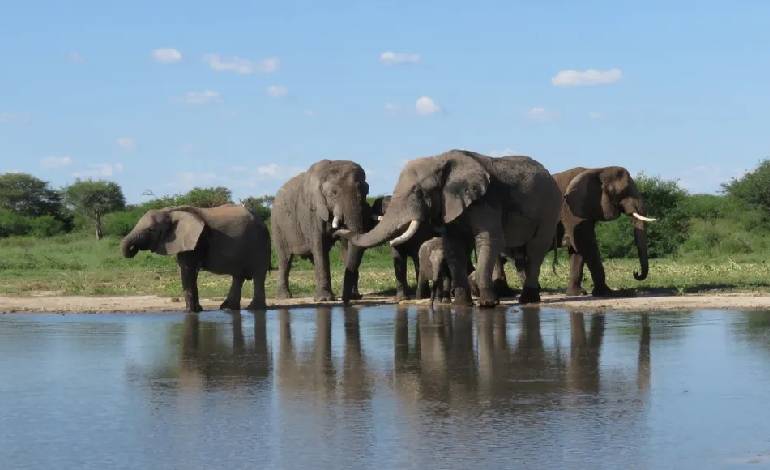
Captive African savannah elephants can relearn natural behaviors and survive in the wild after a phased release, according to new research tracking their movement patterns.
Scientists monitored 12 adult female elephants in the western Okavango Delta, Botswana: six captive elephants undergoing a three-year “soft release,” two elephants released more than a decade earlier, and four wild elephants.
Using GPS collars, researchers measured diurnal and nocturnal movement, daily distances, and home range sizes across seasonal flood cycles.
Before release, the captive elephants moved longer distances during the day, shorter distances at night, covered longer cumulative daily distances, and occupied smaller home ranges compared to wild and rehabilitated elephants.
After release, those patterns shifted. Their movement metrics moved closer to those of rehabilitated and wild elephants, and seasonal patterns emerged once human-imposed constraints were lifted. Researchers concluded that captive elephants can be expected to survive effectively in the wild after release.
However, differences remained. The captive elephants’ home ranges stayed significantly smaller, and even rehabilitated elephants did not fully match wild elephants, likely due to sample size, individual variation, or effects of prior taming.
“While rewilding allows elephants to regain many natural behaviors, captivity likely leaves lasting effects that may prevent full behavioral convergence with wild elephants,” the study noted. Researchers stress that long-term monitoring is critical, as it can take several years for released animals’ movement patterns to converge with wild counterparts.
The findings add to other work showing captive elephants can be successfully reintegrated. A separate study found African elephants kept in captivity for more than 20 years were reintegrated without compromising welfare, with stress indicators improving and two calves born during the study period.
Conservationists say the results support rewilding as a strategy for rehabilitating both individuals and ecosystems, but with realistic expectations. “Success may lie not in complete convergence but in the ability of the released animals to persist and function in the environment they are released in,” researchers said.
Similar efforts are underway elsewhere. In Thailand, the Elephant Valley project is attempting to be the first to reintroduce ex-captive elephants to the wild, while Bangladesh has launched an “Elephant Conservation Project” to rehabilitate captive giants once used in circuses and tourism.