Scientists create 3D digital archive of rare vaquita skeleton to aid conservation

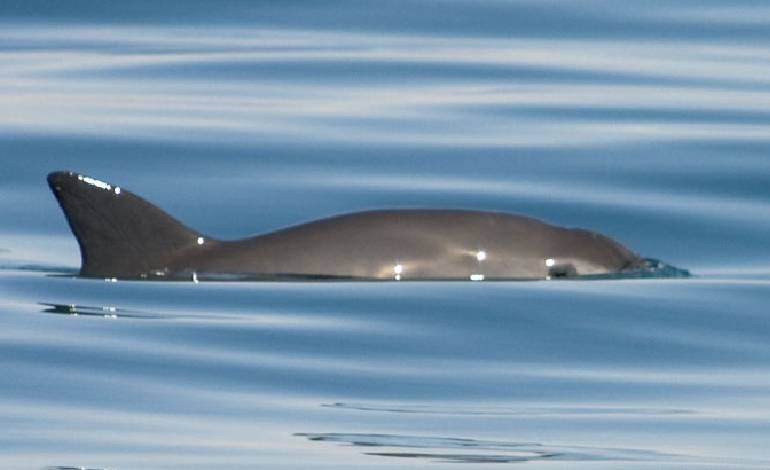
With the wild vaquita population estimated at as few as 10 individuals, scientists have created a detailed digital record of the world’s rarest marine mammal to help preserve its legacy and support conservation efforts.
The vaquita Phocoena sinus, found only in the shallow northern waters of Mexico’s Gulf of California, is the world’s smallest cetacean at about 5 feet long. It is critically endangered due to entanglement in illegal gillnets used to catch another banned species.
Researchers from Florida Atlantic University, in collaboration with the San Diego Natural History Museum, SeaWorld California, and NOAA Fisheries, have digitally scanned a rare female vaquita skeleton donated to the museum in 1966.
Using medical CT, high-resolution micro-CT imaging, and digital photography, the team captured the skeleton at multiple scales — from overall bone structure to microscopic detail. The data was then rebuilt into precise 3D models that can be virtually explored and measured without handling the fragile original.
The study, published in June 2026 in Marine Mammal Science, has made all the data freely available on MorphoSource, an open-access repository. It includes photographs, scan data, and downloadable 3D meshes.
“These digital resources can be used for scientific research, education, and public outreach, including the creation of 3D-printed replicas for museums and classrooms,” the team said in a release. “By transforming a rare physical specimen into a permanent, shareable digital archive, the study expands access to the world’s smallest porpoise and most endangered marine mammal.”
Conservationists stress that the vaquita’s survival still depends on urgent international action to eliminate gillnet fishing in its habitat — efforts that are already underway.
Known for the distinctive dark rings around its eyes and mouth, the vaquita was only described by science in the latter half of the 20th century.