Raising fish in rice fields could fight disease and poverty in Senegal, study finds

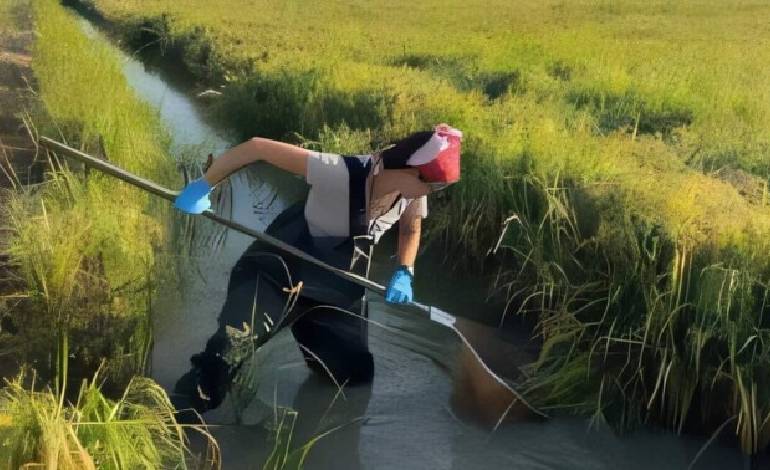
Notre Dame, USA: A new study suggests that raising native freshwater fish in rice paddies could help cut rates of schistosomiasis while boosting food production and incomes for farming families in West Africa.
The research, published in Nature Sustainability by scientists at the University of Notre Dame, focused on the northern Senegal River basin — a hotspot for the chronic disease that affects more than 220 million people worldwide, most of them in sub-Saharan Africa.
Schistosomiasis is caused by parasitic worms spread by freshwater snails. Rice farmers are especially vulnerable because the snails thrive in the standing water of rice fields. Despite decades of mass drug treatment campaigns, reinfection is common and the cycle of disease and poverty persists.
“By restoring native fish to rice fields, we may be able to reduce disease transmission while helping farmers produce more food and generate additional income,” said Jason Rohr, professor of biological sciences at Notre Dame and corresponding author. “Those kinds of win-win solutions are rare, but they are exactly what sustainable development requires.”
Fish as natural pest control
The team analyzed data from more than 400 households in rural Senegal and found children of rice farmers had a higher prevalence of schistosomiasis than children of non-farmers.
To test a solution, researchers introduced two native fish species — African Bonytongue and Nile tilapia — into rice fields. Both species eat snails or compete with them for resources. In two trials, the fish thrived without being actively fed.
Fields with both species had fewer of the snails that host the parasite responsible for the dominant form of schistosomiasis in the region. That could mean lower infection risk for farmers and their families.
Researchers say the next step is to test whether rice-fish co-culturing can be scaled across other schistosomiasis-endemic rice-growing regions. If results hold, the method could become a model for addressing health, food security and poverty at the same time.