Orangutan mothers appear to plan ‘playdates’ for their young, study finds

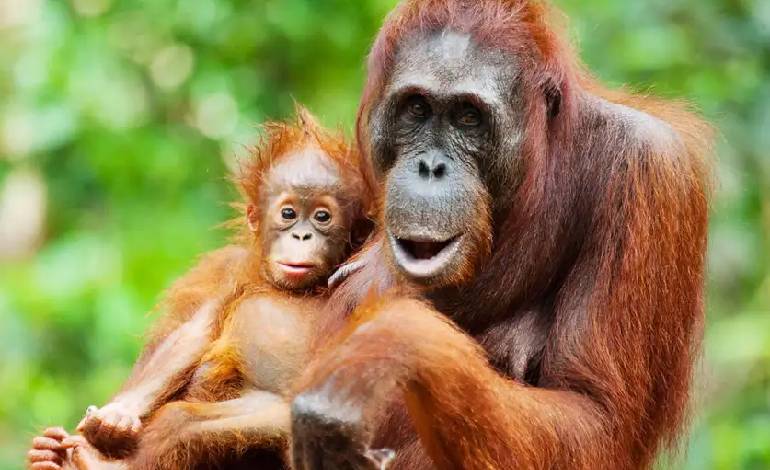
Konstanz: Wild Bornean orangutan mothers may be actively arranging social time for their infants, new research suggests — traveling into neighbors’ territories so their young can play together.
Orangutans are largely solitary apes. Females raise a single infant alone for 6 to 7 years, and opportunities for youngsters to meet are rare. But 15 years of data on 31 wild Bornean orangutan mother-offspring pairs shows mothers do something about it.
Researchers from the Max Planck Institute of Animal Behavior in Konstanz analyzed about 30,000 hours of observations tracking where the apes were, who they were with, and what they were doing.
They found that mothers with similarly aged offspring spent a “disproportionately high amount of time together in the same area”. In those meetings, the young tended to play. Play was even more likely if the mothers were closely related.
The travel patterns also point to planning. The distance the apes traveled increased in the days before and after these meetings, as mothers headed into a neighbor’s territory and then returned home.
“Our study provides strong evidence that wild Bornean orangutan mothers adjust their ranging behavior to increase their offspring’s access to social play,” the team wrote.
Play is important for learning social and motor skills, and for practicing behaviors needed later in life. For male orangutans, that includes fighting.
“I think the assumption would be that orangutans require less play because they’re less social than the other apes, but orangutan males have to fight, so they have to practise that somewhere,” said Zarin Machanda of Tufts University.
The findings add to growing evidence that even solitary species make complex social decisions for their offspring.