Biochar offers way to turn India’s farm smoke into ‘black gold’

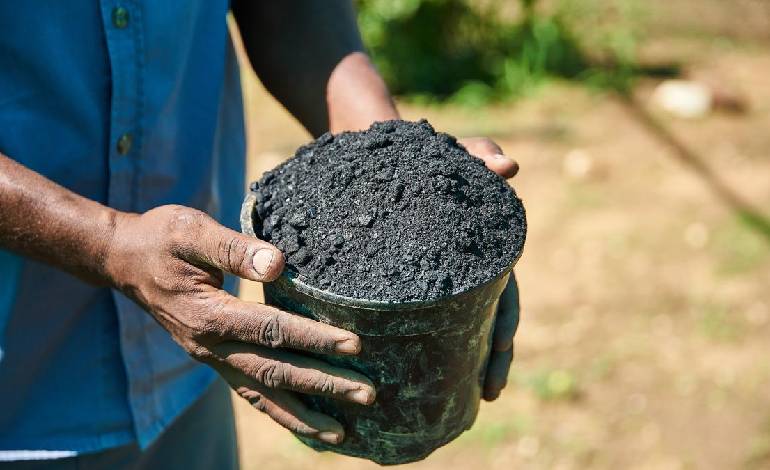
New Delhi: India’s farms burn more than 20 million tonnes of paddy straw every year, but scientists say that same “smoke” could be converted into biochar — a carbon-rich material being called ‘black gold’ for soil health and climate.
India’s agriculture faces a paradox: vast amounts of biomass that could improve soil are instead set ablaze in fields. Punjab and Haryana alone burn over 20 million tonnes of paddy straw annually due to short post-harvest windows and lack of alternatives. The practice releases greenhouse gases and fine particles, worsening air pollution while stripping soil of organic matter.
At the same time, large tracts of farmland from Maharashtra’s black soils to Kerala’s red soils suffer from low organic carbon, poor water retention, and rapid nutrient loss, dragging down crop yields despite better seeds and irrigation.
Biochar as a carbon-negative fix
Biochar emerges as a carbon-negative solution. It is made by heating agricultural waste in low-oxygen conditions through pyrolysis. What remains is a carbon-rich material that breaks down very slowly in soil, locking carbon away for long periods.
Beyond carbon capture, biochar is highly porous. It helps bind soil particles, hold water, and create habitat for beneficial microbes. When added to degraded soils, studies show it can improve crop productivity by 10% to 30% and water-holding capacity by 10% to 25%, especially in nutrient-poor soils.
The material is already being called “black gold” because it addresses three problems at once: reviving degraded soils, sequestering carbon, and giving crop waste a productive use. Innovations like tractor-mounted pyrolysis units are now converting stubble into biochar at village level, giving farmers an income stream instead of smoke.
Experts say biochar is not a silver bullet, but it offers a science-backed, multisectoral pathway for India to meet climate and farm productivity goals.