Debongshi Chakma: Weaving livelihoods and legacy in Lawngtlai

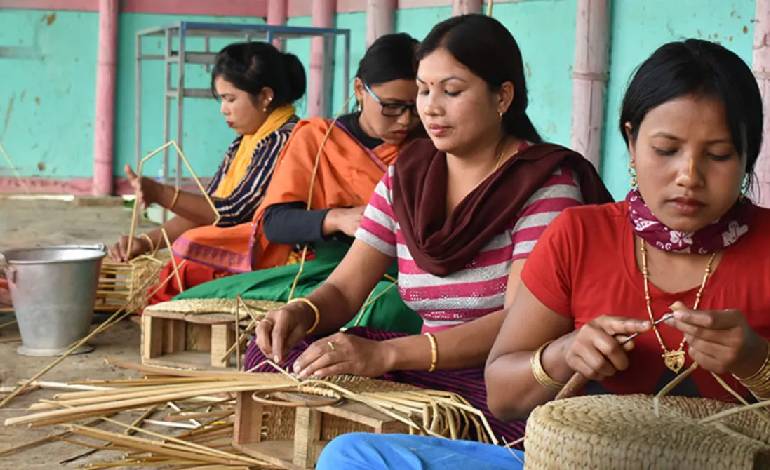
Lawngtlai, Mizoram: Women entrepreneurs are redefining what development looks like in India’s most remote corners. Across tribal communities, women are turning age-old skills into sustainable livelihoods, proving that economic independence can grow from cultural roots rather than at their expense.
At 24, Debongshi Chakma is living that change. From Lawngtlai district in Mizoram, she has built a 500-member collective that helps women earn through traditional tribal crafts while keeping the Chakma community’s cultural heritage alive.
For Debongshi, entrepreneurship was never just about business. As a member of the Chakma tribe, she grew up surrounded by weaving, bamboo craftsmanship, indigenous food practices and jhum cultivation. But she also saw the struggles many women faced at home — economic hardship and social vulnerability, especially among divorced women.
Instead of seeing those realities as limits, she saw a way forward. Through Bodhibloom Society, Debongshi brought together women artisans, farmers and craftspeople under one platform. Today the collective supports livelihoods across handwoven textiles, bamboo products, traditional foods and sustainable farming.
“I do not want to see any woman suffering or unemployed,” Debongshi says. “My vision is to create opportunities so that every woman in my community is self-reliant and empowered. I want to preserve our traditions and proudly represent our culture on the global stage.”Her work challenges a common idea — that tradition and economic growth don’t go together. Every textile, bamboo creation or food product from Bodhibloom Society carries generations of tribal knowledge. Yet these items aren’t stuck in local markets. They’re being shaped for consumers who now value handmade, sustainable and culturally authentic goods.
In a region with limited access to large-scale infrastructure and mechanised production, this approach has opened new income paths. It also keeps traditional skills relevant for younger generations. Here, cultural identity becomes an economic strength instead of a barrier.
Market access made the difference. Through collaboration with TRIFED, the Tribal Cooperative Marketing Development Federation of India, Debongshi’s products now reach buyers far beyond Mizoram. The partnership connects tribal producers to retail and e-commerce networks, helping artisans find customers who value the craft behind each piece.
This support ties into a wider effort to strengthen tribal entrepreneurship across India. Through Van Dhan Vikas Kendras, tribal producers get help with value addition, packaging, branding, skill development and market linkages. For entrepreneurs like Debongshi, these platforms bridge the gap between village production and national visibility.
The story of Debongshi Chakma isn’t just about selling crafts. It’s about creating dignity through livelihoods, giving women economic agency, and showing that indigenous knowledge still matters in a fast-changing world.