World bongo day: Rare antelope reappears in Kenya forest after years feared extinct

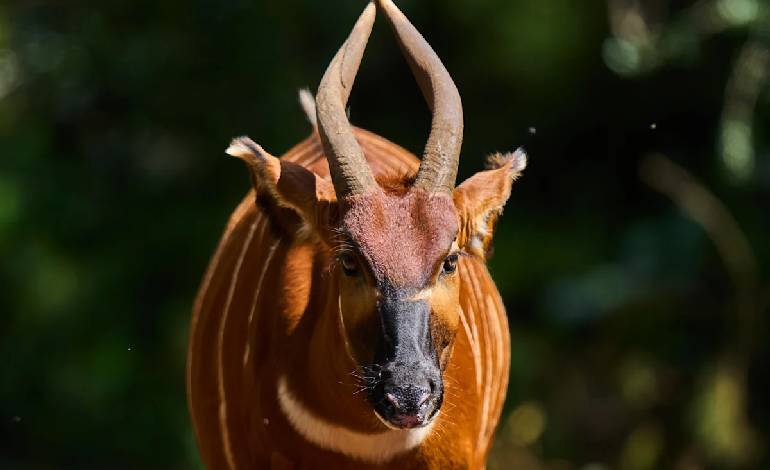
On World Bongo Day, conservationists have shared new trail camera images confirming that the critically endangered mountain bongo has reappeared in a region of Kenya where it was thought to be extinct.
For more than five years, scientists feared the wild mountain bongo population was confined to a tiny range in the Aberdare mountains. Now, field cameras in the Maasai Mau forest, about 200 kilometers away, have captured a mature male bongo exploring a remnant forest fragment.
“The excitement in camp was unbelievable when we first looked through the photos,” said Oscar Dyer, Director of Operations for the Mountain Bongo Project (MBP). “Seeing a bongo here again is incredibly exciting and it reinforces our determination to continue searching, protecting this forest, and finding evidence of more bongos in the area.”
The images are the result of years of work by MBP rangers, many of them Maasai, operating in one of Kenya’s most inaccessible forests. Last year, a hi-tech AI survey by England’s Chester Zoo and Kenyan wildlife officials estimated just 28 bongos in the Aberdares stronghold. MBP later confirmed the number could be closer to 40. The Maasai Mau sighting brings renewed hope for the species.
Dr. Tommaso Sandri of Chester Zoo, who first identified signs of the mature male in 2018, said if it remained hidden for years, others may still be in the area. That proved true when cameras later recorded a young male and young female. Markings analysis confirmed they are additional individuals.“
This is huge news,” Sandri said. “Unlike Aberdares, Maasai Mau is not a national park, and the reappearance of bongo may focus organizations on increasing broader protections.” Bongos are Africa’s largest forest antelope. Their rarity and shyness make them difficult to track, making the find a testament to MBP rangers who use long-held local knowledge to monitor the ecosystem.