Ancient toothy platypus fossil found in SA outback sheds light on mammal’s bizarre past

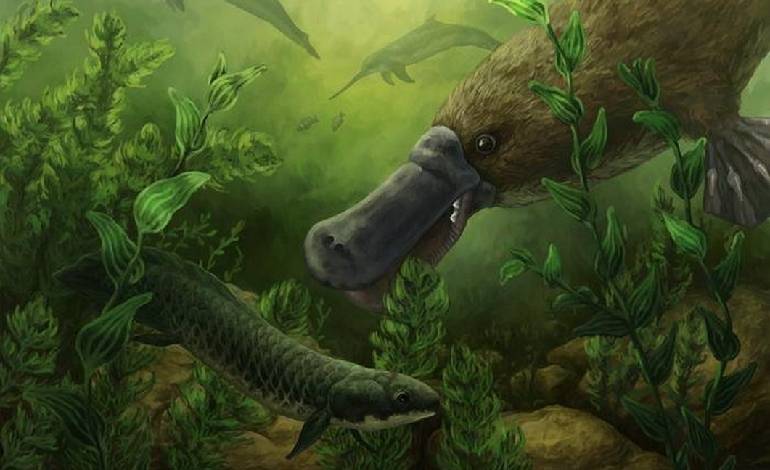
Adelaide: Everyone knows that the platypus is the world’s strangest mammal, obeying conventions about as well as Alice Cooper or Ozzy Osbourne ever did.
Now an “exciting” new fossil is revealing more about this ancient lineage’s long history: namely, some serious gnashers.
Paleontologists made the rare discovery east of the Flinders Ranges in the remote outback of South Australia.
“Platypuses are extremely rare in the fossil record and are often restricted to teeth, so it’s exciting to find new material and learn more about these unique mammals,” said Dr. Aaron Camens of Flinders University, Adelaide.
The well-preserved fossils belong to the oldest known species, Obdurodon insignis, and are described in the journal Australian Zoologist. They show that a toothed ancestor of the modern platypus lived during the late Oligocene, around 25 million years ago, in the huge lakes, slow-flowing rivers, and forested lowlands of central Australia.
Dr. Camens said Obdurodon insignis mainly differs from modern platypuses by having well-formed teeth — molars and premolars — while the modern platypus loses vestigial teeth shortly after birth and uses only a small horny pad to chew its food as adults.