Nightingales return in stronger numbers to England, raising hopes for woodland health

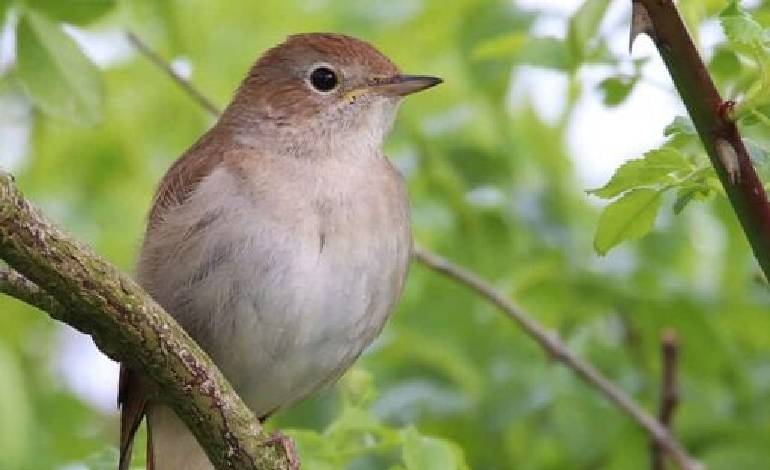
Kent, England: The nightingale, known for its melodic and complex song, is seeing a growth in numbers in England. The migratory bird arrives from West Africa in late April each year and spends a few weeks looking for a mate and marking its territory. Small, brown, and remarkably secretive, nightingales are rarely seen. Often, their distinct song is the only way to know one is nearby.
After being placed on the Birds of Conservation Concern’s Red List in 2015, conservationists are now recording an upsurge. The British Trust for Ornithology reported an 8.9% increase in singing males between 2014 and 2024. Last year, RSPB reserves logged their second highest total of singing males in more than 10 years.
Alan Johnson, the RSPB’s manager for Kent and Essex, is cautiously optimistic. “Nightingales are a proxy for the health of the wider countryside,” he said during a walk through Northward Hill, an RSPB reserve that now holds the largest population of singing males.“
Nightingales are an indicator of what’s happening in these woodland scrub habitats. This walk today is telling me this is in pretty good nick, it’s working for nightingales, there’s loads of them in here,” Johnson said. “It’s the most common bird that I can hear at the moment. It’s not often you can say that. Normally you’d wander round and hear one or two, but we’re surrounded.”
Still, Johnson cautioned that woodland birds overall are not out of the woods yet. Populations continue to face pressure from insect decline, agricultural intensification, changes in land use, and climate change. For now, though, the nightingale’s song is carrying farther across English scrubland than it has in years — a small, brown bird making itself heard.