‘No Refusal’ captures fading legacy of Calcutta’s yellow taxis

NEW DELHI: “I think there is a light in cloudy Calcutta that only belongs to Calcutta,” says novelist and photographer Ananth Padmanabhan.
For Ananth, this is perhaps the most enduring image of Kolkata: a particular quality of light falling over its streets, catching the yellow of a taxi, illuminating a crumbling facade or briefly animating the ordinary theatre of a traffic signal. It is a light he has returned to for nearly three decades, trying to hold on to a city that, in his photographs, is at once beautiful, weathered, restless and alive.
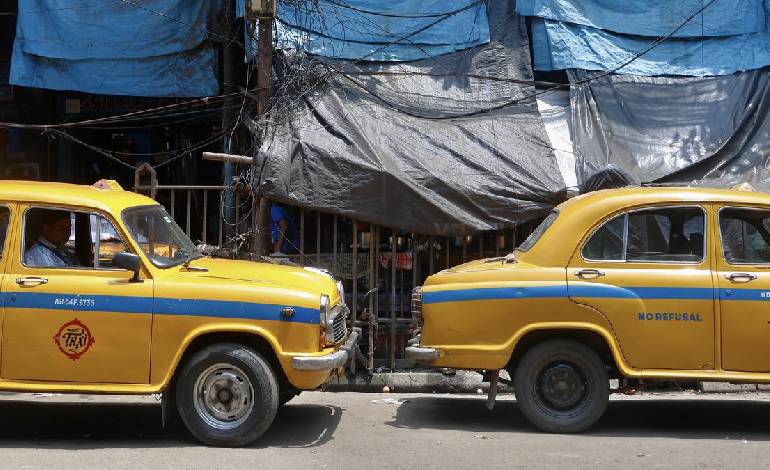
His relationship with Calcutta began in January 1998, when he travelled from Delhi to attend the city’s book fair, then held on the Maidan. Stepping out of Howrah station, he encountered a long line of yellow Ambassador taxis. He was instantly captivated.”You stand at any traffic light in Calcutta, and there are a million images and a million stories happening simultaneously,” he says.
His first solo exhibition, Calcutta: Walking in the City, was presented at the India Habitat Centre in 2012. No Refusal, his latest exhibition at the Visual Arts Gallery, India Habitat Centre, New Delhi, continues that visual conversation. The photographs, made over several years, trace the relationship between the city and a vehicle that has become inseparable from its identity.
Based on the Morris Oxford, the Ambassador had once been among the few coveted private cars available to Indian families, often after long waiting periods. Over time, it became an indispensable part of the country’s public transport landscape. In Calcutta, its yellow incarnation acquired an identity of its own.
The words ‘No Refusal’, painted across the taxi, fascinated Ananth as much as the car itself. Introduced as part of a Government directive to ensure that passengers would not be denied a ride, the phrase became an unexpected element of the city’s visual vocabulary.”If you show someone a yellow taxi, most people will immediately know it is from Calcutta,” he says.
With production discontinued in 2014, the iconic taxis have gradually disappeared from Kolkata’s roads. Ananth’s photographs capture them on the streets, in motion, in monsoon showers, parked after long shifts, and in garages where ageing cars are taken to be scrapped. One wall is given over to portraits of drivers posed with their taxis.
For the drivers, the disappearance of the Ambassador is not merely a matter of losing a familiar vehicle. These cars have been their workplaces and, in many cases, the means through which they have supported their families.