Our galaxy grew by eating other galaxies

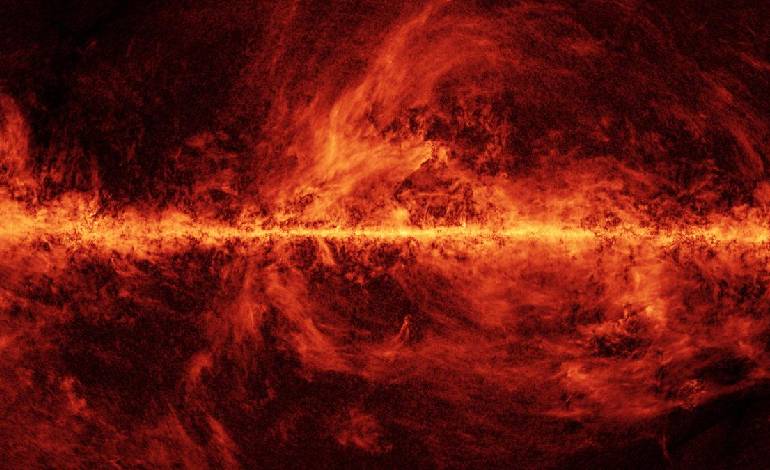
The Milky Way did not start big. It grew by swallowing smaller galaxies, leaving behind streams of “ghost stars” that still orbit differently from the rest.
The Small and Large Magellanic Clouds are the latest victims, currently being pulled in. In the 1990s, Rodrigo Ibata found the first proof: stars from the Sagittarius dwarf galaxy absorbed about six billion years ago.
Later, using ESA’s Gaia mission, Amina Helmi’s team found 30,000 stars moving backwards — remains of Gaia-Enceladus, a galaxy a quarter the size of the young Milky Way that crashed into us 8-11 billion years ago.
In September, Ibata, Helmi and Vasily Belokurov won the Kavli Prize for uncovering this violent history. At least 20 dwarf galaxies still orbit us today, and many more are likely to be swallowed in future.