How KNMA is breaking silos to unite art practices

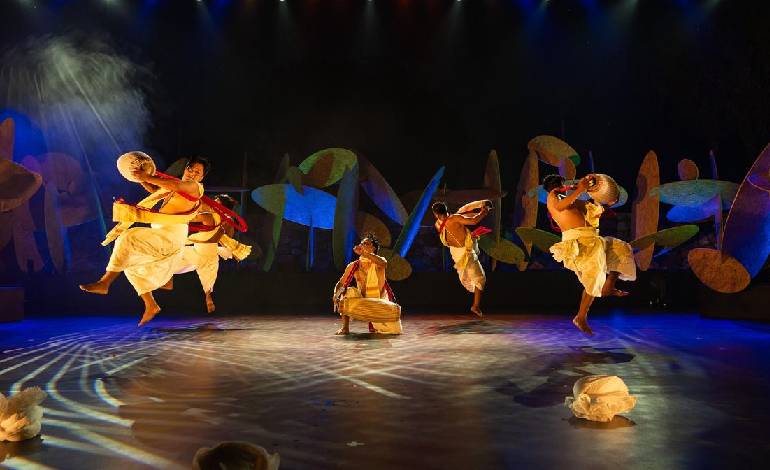
NEW DELHI: The Kiran Nadar Museum of Art (KNMA) is working to break the silos that have long separated Indian art practices — modern from folk, classical from contemporary, Indian from South Asian, and art from performance, film and archives.
Founded by Kiran Nadar and opened in January 2010 as India’s first private museum for modern and contemporary art from India and the sub-continent, KNMA now holds over 16,000 works spanning the 3rd century CE to the present.
“What we are trying to build is a narrative of Indian art that is genuinely comprehensive,” Nadar says. “One that does not privilege certain practices over others. The depth and diversity of this country’s visual culture deserves to be seen whole.”That vision was on display in The Meeting Ground: Scenes from the KNMA Collection, staged at Christie’s in London from July 16 to August 21, 2026. It was the first time Christie’s London dedicated its summer exhibition to South Asia and to a single institution.
The non-selling show brought together works by 67 artists from India, Bangladesh, Pakistan and Sri Lanka. Curated by lead curator Akansha Rastogi, it avoided a chronological narrative and instead created meeting points between protagonists.”It highlights alliances premised on comradeship, hospitality and dialogues, as well as unease, contestation and diverging paths,” Rastogi says.
The exhibition placed M.F. Husain’s Birds in a Tree (1973) and Jagdish Swaminathan’s Homage to Solzhenitsyn (1973) alongside contemporary collaborations like Gauri Gill and Rajesh Chaitya Vangad’s Factory and River II and Mayur and Tushar Vayeda’s Kaal Chakra — When Time Walks the Lands. The final scene, Unfinished Homelands, brought together Zarina’s Home is a Foreign Place with works by Rasheed Araeen and Anwar Jalal Shemza on displacement and Partition.
“Since its founding, KNMA has been committed to situating South Asian artistic practices within broader international conversations,” Nadar said at the London opening. “The Meeting Ground reflects both the depth of the collection and the evolving role of KNMA as a multidisciplinary cultural institution speaking with the world from South Asia.”
In Delhi, the same approach shapes current programming. In-Rhythm, on view at KNMA Saket from September 9 to December 22, pairs Italian artist Bice Lazzari (1900-1981) with Indian artist Nasreen Mohamedi (1937-1990) — two artists who never met but developed strikingly similar approaches to line, rhythm and abstraction.
KNMA is also co-organising Nilima Sheikh: Fractured Skies with the Museum of Modern Art (MoMA), New York, on view from September 27, 2026 to June 13, 2027 — Sheikh’s first solo presentation in New York.
With a new museum campus of over one million square feet under construction in Delhi, Nadar says the expanded space will finally allow KNMA to attempt a truly whole view of Indian visual culture — where no practice stands alone.