How Rajasthan women are trying to escape the atta-satta marriage system

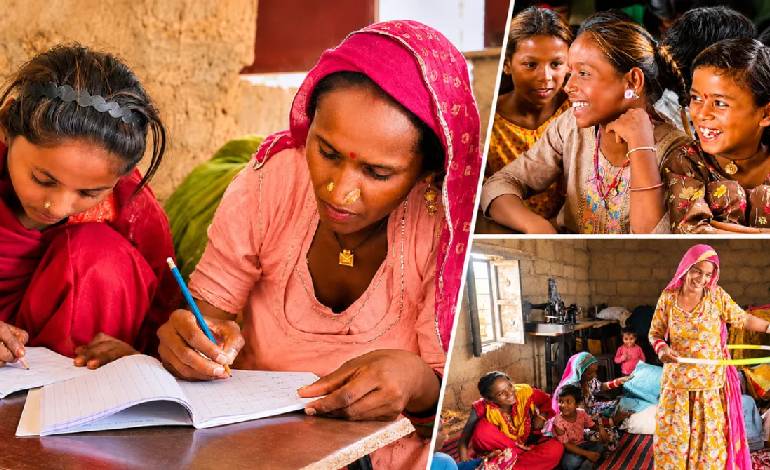
JODHPUR: In parts of Rajasthan, a woman’s marriage is not her own. It is a family bargain. The custom is known as atta-satta — literally “give and take”. A daughter is married into one household while a daughter from that household is married to her brother, or another male member of her family. The two marriages are negotiated together. What happens in one can affect the other.”Their marriages are not treated as separate relationships. They are tied together by a custom known as atta-satta,” says Govind Singh Rathore, founder of Jodhpur-based Sambhali Trust.
Rathore says the practice remains particularly prevalent in parts of western Rajasthan even today, including the desert districts of Barmer, Bikaner and Jodhpur.
Its most consequential feature is not only that two marriages are arranged together, but that one woman’s choices can be used as leverage against another.”Women as young as 19 are married to men in their 50s or 60s, and their lives often spiral into cycles of abuse, violence and neglect,” he says.
The practice came under legal scrutiny in Rajasthan this year when the Rajasthan High Court, while hearing a matrimonial dispute, criticised atta-satta and described the arrangement as a form of “mutual hostage-taking” between families.
The case involved two weddings held in Bikaner on March 31, 2016. Kiran Bishnoi married Sunil Kumar, and on the same day, Sunil’s minor sister Suman was married to Kiran’s brother Ravindra under atta-satta. After attaining majority, Suman refused to accept the child marriage, triggering disputes between the two families. Kiran alleged cruelty, dowry demands and assault, and was ousted from her matrimonial home in 2020.
While granting her divorce in April 2026, a division bench of Justices Arun Monga and Sunil Beniwal termed the custom “legally and morally bankrupt” and an “inhuman barter system involving human lives”.
Many women caught in such arrangements reach out to Sambhali Trust after being denied the chance to study or to leave abusive households.
The Trust’s Nirbhaya Initiative, launched in 2014, connects survivors with in-house psychologists, medical teams and legal advisers to guide them through rights education and court processes.
Between April 2025 and March 2026, the Trust received 956 helpline calls, handled 188 cases through psychological counselling and legal guidance, and provided temporary shelter to 14 high-risk survivors.
Nearly 19 years since Sambhali Trust began working with women and girls in Rajasthan in 2007, the need for its intervention remains evident.