Bison return to Mexico’s Chihuahua Desert after 200 years

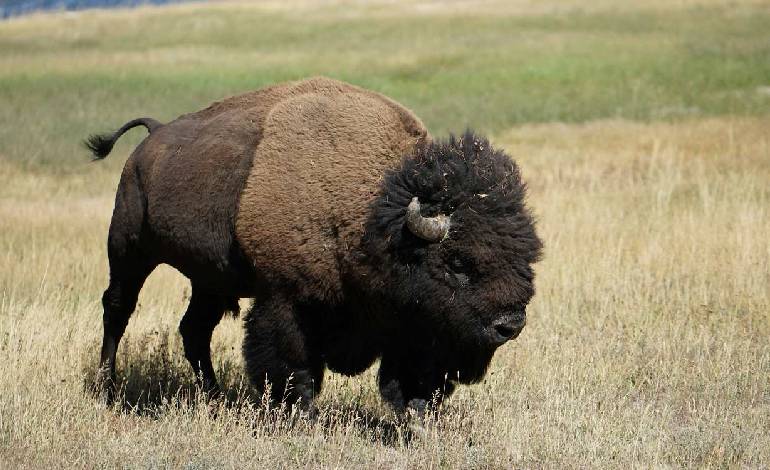
A series of reintroductions has seen the bison return to a landscape in Mexico’s Chihuahua Desert after a 200-year absence.
Having acted as ecosystem anchors for millennia, their return is seen as a major step towards fortifying the area’s sensitive arid grasslands.
The habitat is the federally-protected Cuatrocienegas in the state of Coahuila — a 324 square-mile landscape typified by deep pools of water, gypsum crystal sand dunes, and a rich variety of plant species.
Set within it is El Santuario Wildlife Reserve, where 48 bison were brought from other areas of Mexico last year.”It offers you so much hope. Simply bringing back a fundamental species that was there before and should be there,” said Gerardo Ruiz Smith, director of the Fundacion Pro Cuatrocienegas.
From Romania to the American West, bison are being sought out as a tool for naturally managing ecosystems. Weighing over 1,000 pounds, their hooves break up ground allowing water and seeds to penetrate, increasing water retention. Their woolly coats disperse seeds over vast distances, their dung fertilizes soil, and their habit of scratching on trees and rolling in dust shapes the landscape.
Their bodies feed predators, scavengers and microbes when they die.”Today we are not just recovering a species: we are recovering balance, memory, and hope for a sustainable future,” the Fundacion wrote in an Instagram post in August when the largest transfer was completed.
The return could pose challenges. Bison evolved to roam vast distances, and kept inside a roughly 10,000-acre area, overpopulation is a concern. The area’s natural predators are largely gone. While a puma might take a sick or infant bison, it was the Mexican wolf that preyed primarily on bison centuries ago.
At present, there is no consolidated federal mechanism for allowing bison to be used sustainably as an alternative to conventional livestock farming. Ruiz said sustainable bison management programs from the US and Canada could act as models, potentially generating economic benefit for rural populations around Cuatrocienegas.